This post is an excerpt from the article World Bank seeks closer philanthropic ties as aid shrinks, published October 14, 2026 on Devex. Read the full article here.
As aid budgets contract, the World Bank Group is trying to turn its relationships with philanthropic foundations into broader development partnerships, drawing on their expertise and flexibility as well as their funding.
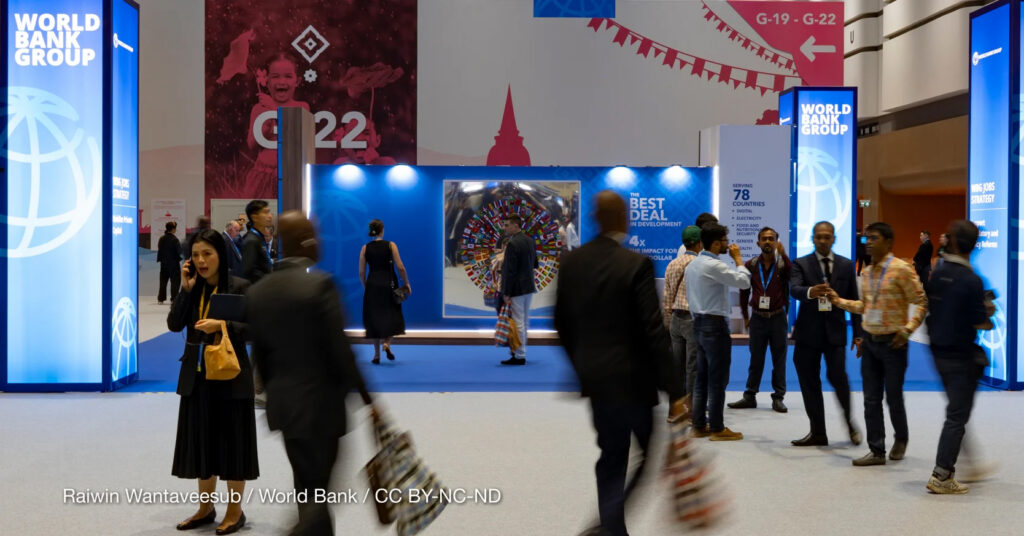
Its new philanthropy hub, launched during the World Bank-International Monetary Fund’s Annual Meetings in Bangkok, aims to make the institution easier to navigate for foundations and involve them earlier in designing programs around shared development goals.
For Peter Laugharn, president and CEO of the Conrad N. Hilton Foundation, which is advising on the hub’s development, the opportunity is to connect philanthropy’s innovations with the resources needed to expand them.
“Philanthropy can help test and prove new approaches, strengthen partnerships, and support ideas that can ultimately be funded by the World Bank and others to achieve greater scale.”
Peter Laugharn, President and CEO of the Conrad N. Hilton Foundation
The hub was launched at the first World Bank Group Philanthropy Forum, co-convened with Asian Venture Philanthropy Network, the Institute of Philanthropy, the OECD’s netFWD, and the Philanthropy Asia Alliance by Temasek Trust. The forum brought together more than 200 leaders from philanthropic foundations and networks, family offices, development institutions, and partner organizations, according to the press release.
But engagement with philanthropies is not a new endeavor for the bank. In fact, over the past 10 years, more than 80 philanthropic organizations have engaged with the bank, contributing over $1 billion through the institution to client countries and beneficiaries, Franco said.
But the hub marks a more coordinated effort to bring the bank closer to the philanthropic sector. It could also tackle some of the issues that have hindered collaboration thus far.
… While trust funds remain an option for philanthropists seeking to work with the bank, the lender wants collaboration to be about more than contributions to a funding vehicle.
Its new approach organizes partnerships around large development initiatives, including Mission 300, Health Works, Water Forward, and AgriConnect.
Water Forward, launched in April to improve water security for 1 billion people by 2030, is another example. [The Hilton Foundation] is working with the bank, governments, and other partners including Dangote Industries, Water Aid, and the Children’s Investment Fund Foundation, to explore financing and sustainable service models, including support for private water operators.
The Hilton Foundation has invested in safe water in Africa for more than 30 years. Its new strategy aims to support safe drinking water for 5.2 million rural residents by 2031, while collaboration could help reach millions more, Laugharn said.
“Building infrastructure is only part of the job,” he said. Reliable services also require operators, maintenance funding, and sustained government support — areas where he said the bank’s country relationships, regulatory expertise, and financing capacity make it an important partner.