
As a social worker for 21 years, I have witnessed the full spectrum of how our profession is perceived. At our best, we are seen as trusted partners who walk alongside children, young people and families through some of the hardest moments of their lives. At our worst, we are reduced to the hardest parts of the job: the investigator, the “remover,” the person who shows up only when something has gone wrong.
The National Association of Social Workers grounds us in our broader mission, “…to enhance human wellbeing, meet the basic human needs of all people, and put special attention on the needs and empowerment of people who are vulnerable.” During Social Worker Appreciation Month, we often focus on those who work directly with children and youth. I want to widen that lens and focus on a group that is essential to a young person’s stability, yet too often overlooked in both practice and public conversation: caregivers. In my current role as a Program Officer for the Foster Youth initiative at the Conrad N. Hilton Foundation, I carry my clinical social work lens into philanthropy. Our initiative focuses on supporting transition-age foster youth (TAY) by also supporting the adults and caregivers who are central to their lives. Our strategy includes both child and caregiver wellbeing by investing in stable support systems within child welfare, supporting mental health and wellbeing interventions, and advancing system reforms that recognize the importance of caregiver supports.
“We cannot sustainably improve a young person’s life without investing in the stability, capacity and wellbeing of their caregivers.”
Social workers are a critical touchpoint for caregivers, helping them navigate systems and connect to the resources and services they need to find stability and support their children.
Caregivers: the often-forgotten foundation of the child welfare system
In child welfare, caregivers can become the “forgotten piece” of the puzzle. For children and youth who are in the child welfare system, caregivers are often the primary relationships through which they rebuild trust, experience safety and consistency, and start on the path to a stable future.
Each caregiver brings a unique story, set of strengths, and set of needs. Many are navigating complex systems while working to heal from their own experiences of trauma, inequality, racism or other challenges. When we overlook caregivers, we miss one of the most powerful levers for long-term stability and wellbeing for young people.
Improving the system so social workers can better support caregivers
As part of our Foster Youth initiative, the Hilton Foundation invests in partners who are working side by side with public agencies to strengthen everyday practices for child welfare social workers. One of those partners is the Harvard Kennedy School Government Performance Lab (GPL). The GPL has been working with state and local governments and child welfare teams to co-develop practical tools, like the Immediate Needs Questionnaire.
The questions help social workers connect with caregivers as full partners and whole people, reminding them to pause and consider:
The tool is designed to help caregivers better understand and prepare for their responsibilities, while making it easier for social workers to see and respond to caregiver needs.
One manager in Los Angeles, Assistant Regional Administrator Michael Brady, reflected on this shift: “This process created a light-bulb moment for me. We are so focused on supporting a child’s needs that we don’t always talk with caregivers about their own needs separate from a child’s, but of course they have them. This process has given me new ideas for small things we can be doing to better support our caregivers.”
Youth-led training for social workers and caregivers
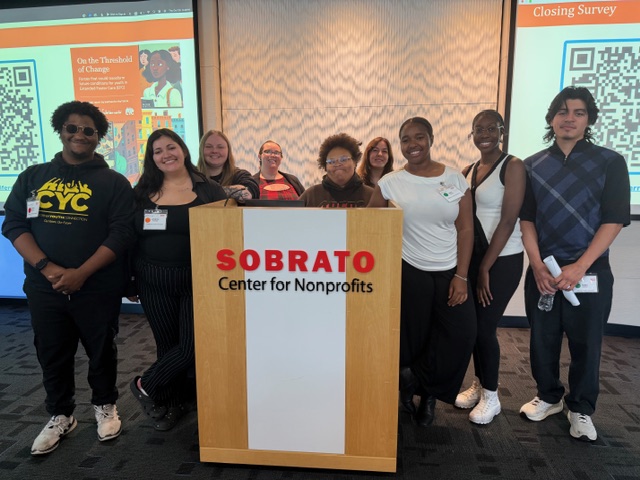
Another partner is the California Youth Connection (CYC), a youth-led organization that develops young leaders to transform foster care and other public systems through local and statewide advocacy. We support CYC’s Youth Training Project (YTP), which helps youth leaders modernize training curriculum for social workers and caregivers, among others.
Through YTP, youth trainers review and update training curricula to reflect the real, current needs of young people impacted by the child welfare system. The curriculum helps caregivers better understand the youth experience in care and the resources available. Navigating an often confusing system is one of the greatest barriers for youth and caregivers, so the training emphasizes practical navigation skills for youth, caregivers and social workers to more effectively access services and supports.
YTP curriculum also ensures social workers engage with youth from a place of understanding and strength rather than trauma alone. The training shifts the conversation from theory to real-world experience, equipping professionals to better support youth and families as they navigate today’s challenges. Ultimately, the curriculum moves youth from “being consulted” to leading the conversation.
A message of appreciation and a call to refocus
As we honor social workers this month, I hope we also commit to changing how we think about child welfare—strengthening the whole support system around that child, especially the caregivers who are central to their daily lives. As a profession, we need to be honest about the ways our systems can undercut this work, and we need to invest in approaches that:
During Social Worker Appreciation Month, I want to honor both the promise and the pressure of this profession. Thank you to the social workers who sit in caregivers’ living rooms late into the evening, listening more than they speak; to those who push their agencies to see caregivers as partners, not problems; and to those who notice the exhausted caregiver and gently ask, “How are you doing—really?”
Thank you for the full breadth of work you take on, and for all you do.