The Conrad N. Hilton Foundation’s Catholic Sisters initiative is committed to supporting the global Catholic sisterhood at every stage of life. That commitment includes a clear, often overlooked reality: many congregations are now navigating how sisters age, where they live, and how they receive care after a lifetime of service.
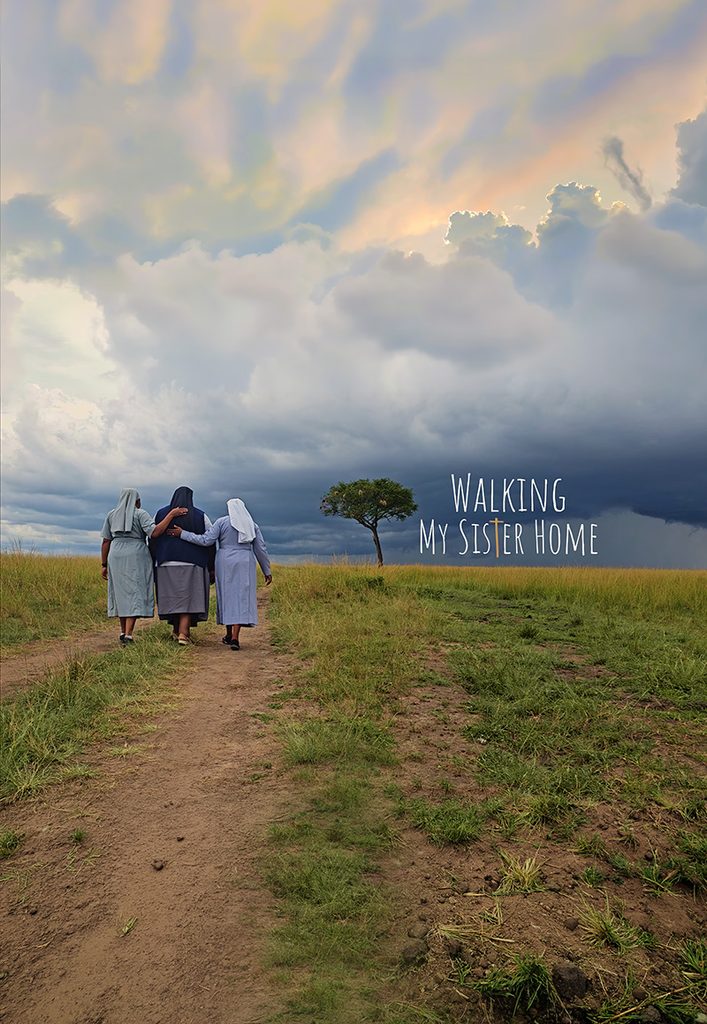
Filmmaker Linda Corley’s new documentary, “Walking My Sister Home,” makes that reality visible. Filmed in the United States, Mexico, and parts of Africa, the documentary follows Catholic sisters in their elder years, exploring questions of health, housing, community, and dignity. It also raises a pressing question: what does society owe the religious women who have spent their lives serving others?
In this interview, Corley discusses what she learned from sisters on three continents, and how philanthropy can be part of a lasting response.
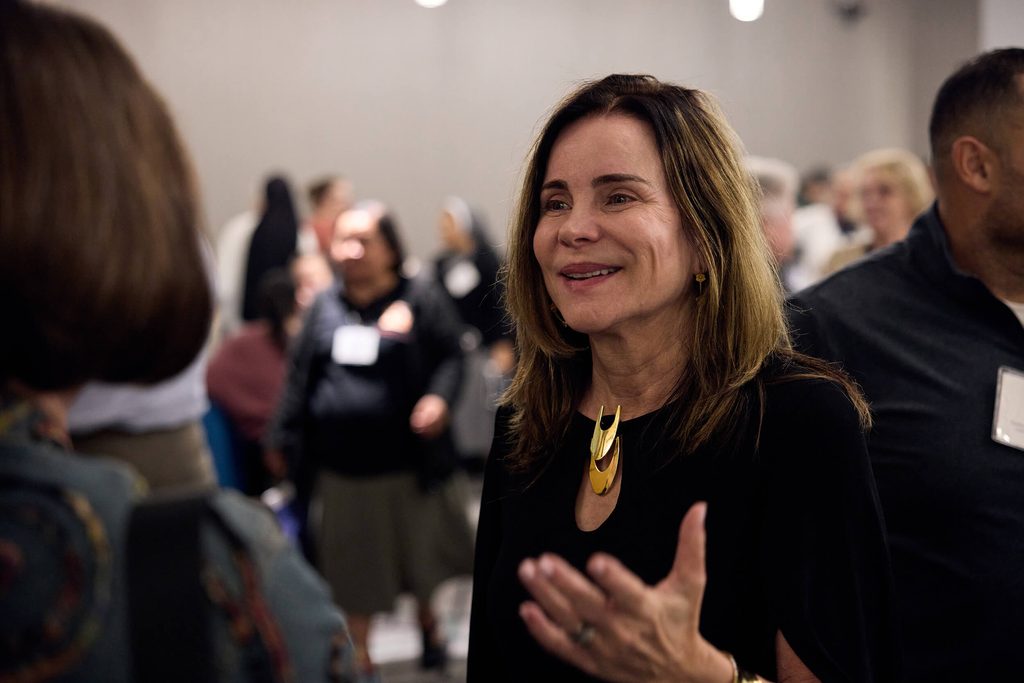
When you began filming “Walking My Sister Home,” what surprised you the most?
“What surprised me is that sisters don’t retire,” Corley says. “Sister Marge, a Tiffin Franciscan, told me: ‘I worked up until eighty-nine and people asked, why did I work so long? And it’s because what I did was never a job.’”
She said she was also surprised that people don’t know about the many challenges faced by aging sisters —”even people in the Church”—which she believes is partly due to sisters’ own humility. “Sisters don’t complain,” she says. “They’re humble; they’re strong. So here we are, with a Catholic sisters crisis in many countries, and most of us didn’t know.”
Historically, younger sisters cared for aging sisters. That model is under strain now. What kinds of solutions did you see emerging, especially in the communities you visited?
Corley pauses before answering, acknowledging the complexity. “There are pieces of the solution,” she says. “But no single answer.”
Some of what she saw involved difficult transitions. “In some congregations that are coming to completion, they’re able to sell off property,” she explains. “That can generate resources. But what’s to become of them after that? Do they go to a secular nursing home and lose their routine, like Mass every morning? Do they lose community life as they’ve known it?”
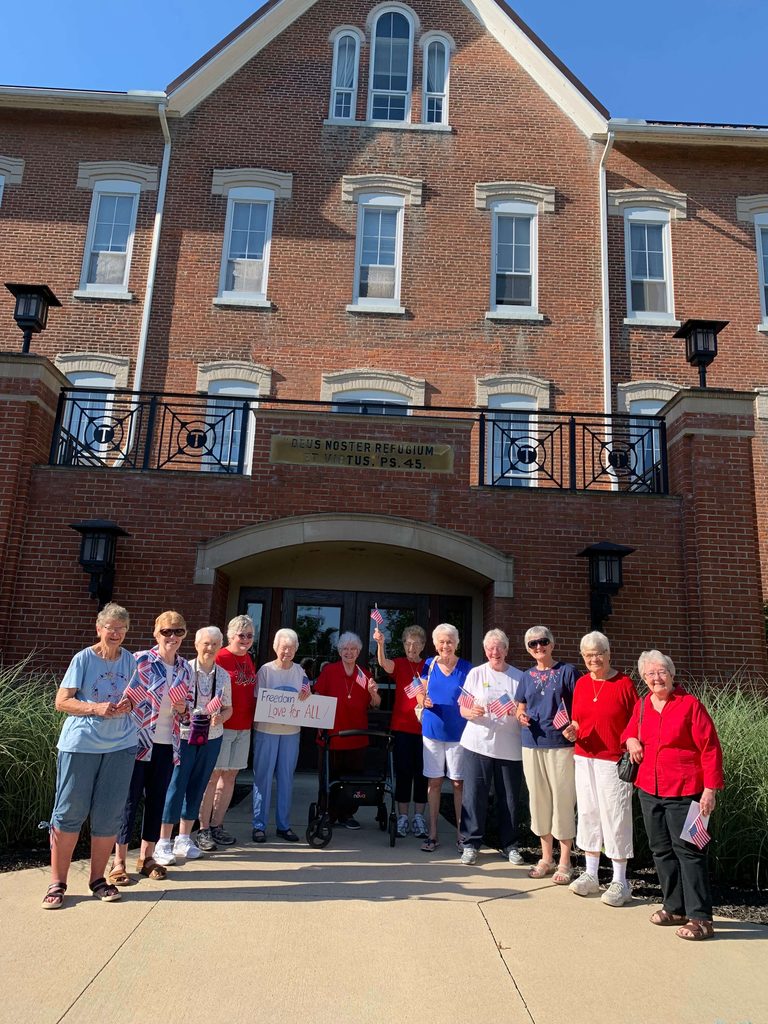
She shares a story that became a powerful symbol for her. “The Sisters of St. Francis of Tiffin, Ohio started out caring for children from the orphan trains, homeless children, just after the Civil War. And now, as they come to completion, they’re going to be giving back their land and their building to people experiencing homelessness. I love that. They started with the homeless and will end by giving to the homeless. It’s a beautiful continuity.”
Training and knowledge are another part of the picture. “In many countries, there’s a significant knowledge gap,” Corley notes. “That’s where Sr. Peter Lillian, the director of the Avila Institute of Gerontology, is doing a beautiful job. It’s a train‑the‑trainer model.”
The Institute brings sisters from other countries to the campus in Germantown, New York and U.S.-based sisters to various locations for ‘Sisters Aging Well Together,’ a program supported by the Hilton Foundation.
“They teach sisters how to identify dementia, how to get a sister safely into a wheelchair, and how to turn her over in bed,” Corley explains. “In countries like Kenya, they don’t have telemedicine, so this kind of information really matters. It doesn’t solve the issue of where they go and who will take care of them long-term. But it builds capacity, which is essential.”
The film highlights a different solution Mexico. “In the documentary you meet Father Fernando,” she explains. “He has a large home and donors who help support it so that older sisters from different congregations all over Mexico can be taken there and cared for.”
It is a promising model, but not without tension. “As he says in the documentary, none of the very elderly sisters want to go,” she recounts. “They don’t want to leave the convents where many of them have lived for fifty or sixty years. It’s too frightening, in your eighties or nineties, to be told, ‘We’re going to completely change your life.’”
However, sisters in the next age cohort, those in their seventies, see it differently. “They told me, ‘We’re ready. We know when it’s our time, we’ll go to that home. We’re preparing ourselves,” Corley says. “If you have time to adjust to it, you’re more at peace with the transition. Father Fernando’s solution is brilliant. It’s just maybe not for the current oldest generation.”
You filmed in the United States, Mexico, and Africa. How did the needs of sisters differ across these contexts?
“The challenges overlap,” Corley says, “but they show up differently in each place.”
In Kenya, the scale of material need was stark. “We went to one convent where they had to move older sisters down from a house on the mountain,” she recalls. “There was no elevator, and these elderly sisters were literally climbing with their hands and knees up to their bedrooms. They moved them to a one‑floor house, which helped with mobility. But they still didn’t have clean water, and a lot of what they ate wasn’t nutritious.”
The knowledge gap around aging was also profound. “As Sister Agnes [of the Care for Aging Sisters Association of Kenya] said, ‘We didn’t know what dementia was. We used to think our sisters were possessed,’” Corley says. “That is where training and education become life‑changing.”
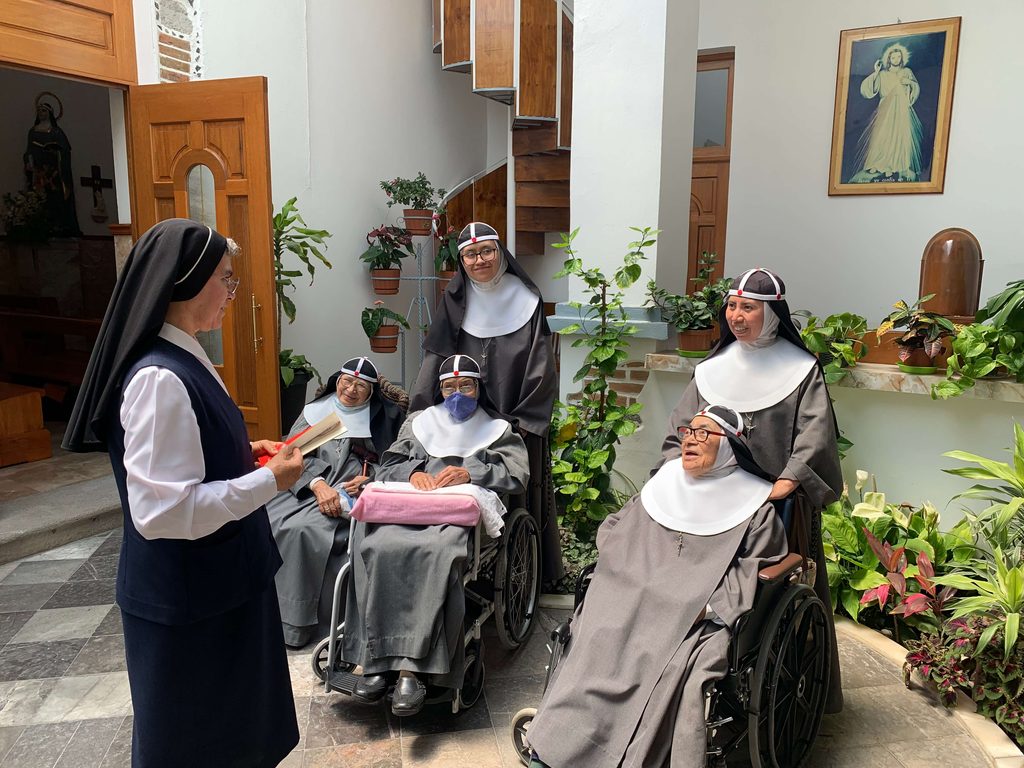
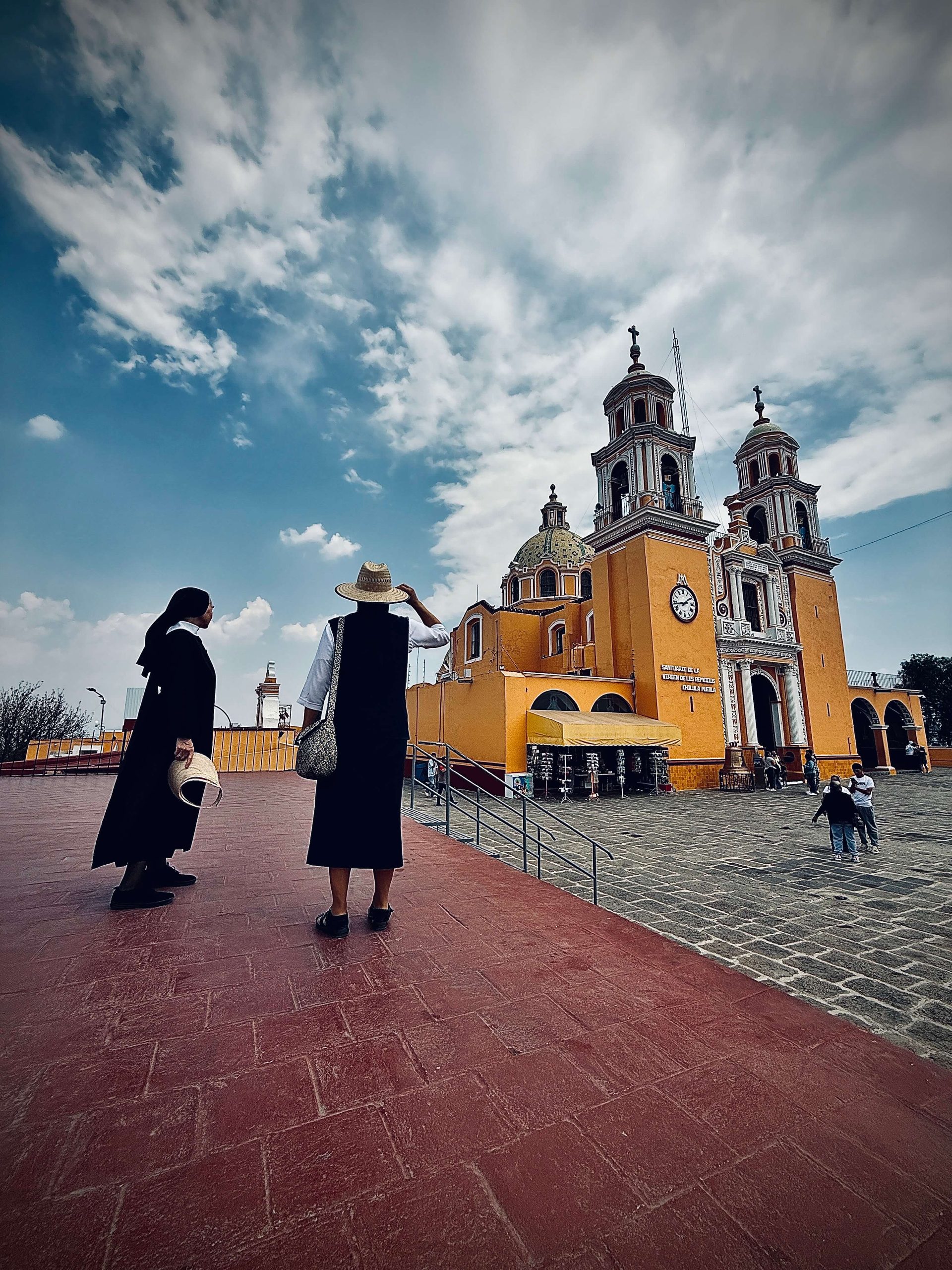
Meanwhile, in Mexico, Corley witnessed challenges in accessing and paying for healthcare and medicine. “We went to a contemplative congregation in Puebla. One sister was dying of breast cancer, and her sisters couldn’t afford chemotherapy,” she says. “That’s not just a convent problem—it’s a wider systemic issue in Mexico—but it hits aging sisters very hard.”
At the same time, she saw how targeted investments can make a real difference. “When I was in Africa and Mexico, sisters would proudly point things out and say, ‘You see this wheelchair? You see this handrail? You see this ramp? This is from the Hilton Foundation.’ It shows how important those ‘little’ changes are.”
In the United States, the picture was different again. Corley’s interviews with sisters demonstrated that addressing mental health and wellbeing in later life is as important as financial planning.
“The problem here is often not basic infrastructure,” Corley says, “but the reality that their numbers are dwindling. They’re watching communities their founders started 150 years ago come to an end.”
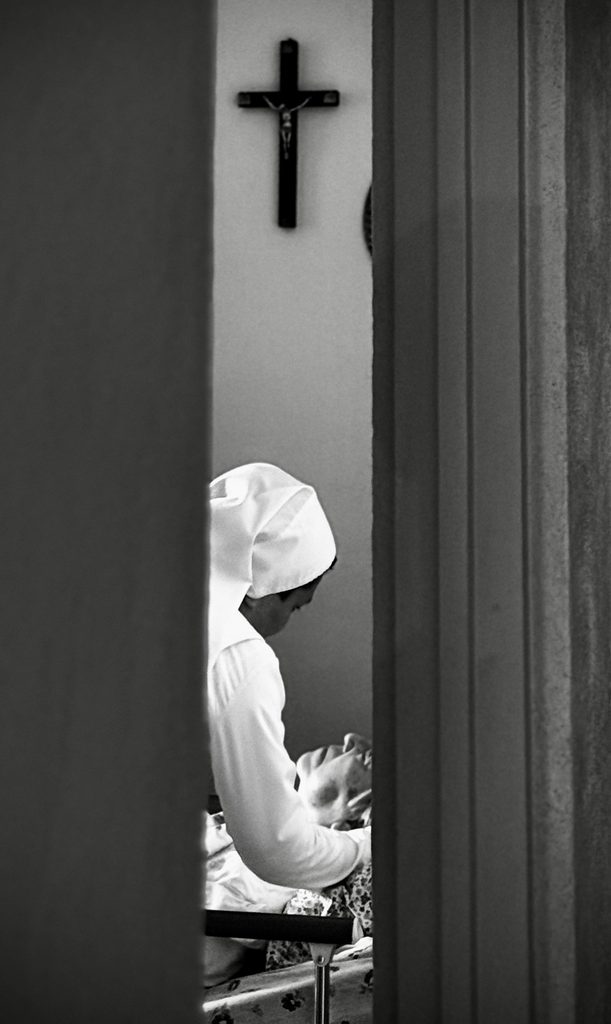
That takes a deep emotional toll. “A lot of sisters in the United States suffer from despair, loneliness, and depression,” she says. “They were used to community life. Now, as communities grow smaller and friends pass away, that sense of belonging can erode. We have to pay attention to that.”
Some might say, “This sounds heavy. Why should I watch a film about a crisis?” What would you say to them?
“There are solutions in this story,” Corley answers. “I want people to know that. And I promise you will come away more wowed by sisters than you ever have been.”
That conviction is one reason she decided to include a substantial history segment. “You will say, ‘I had no idea that these women helped start the Mayo Clinic. I had no idea they started one‑fifth of the hospitals in this country. I had no idea they were responsible for so much of the private school system,’” she says.
She also points out that the film highlights those working toward solutions. “We show there’s Sister Peter, working hard to be part of the solution,” she says. “There is Father Fernando with a creative model for shared care.”
At the same time, Corley does not want to soften the reality too much. “I think we have to hear the hard truth. Sometimes that’s the only way to compel people to act. But you’ll also come away having learned something about sisters around the world: their accomplishments, their resilience, their faith.”
“I think that’s why many will watch this film: they had a sister in their life, or they’re Catholic, or they simply admire the lifetime of work sisters have given,” she continues. “Or they’re curious about religious life. Whatever brings them to it, my hope is they leave not only informed but moved to act.”
After everything you have seen and heard, what is your call to action for those who watch “Walking My Sister Home”—particularly to those in Catholic philanthropy and Church leadership?
“First, remember a specific sister,” Corley says. “By name. Think about what she did for you. And if she is still alive, reach out. Write to her. Go see her. Let her know her life had an impact.”
Then she widens the frame. “For funders and Church leaders, I would say: treat the aging of sisters as part of your core responsibility, not a side issue. They built institutions we still depend on. Their elder years are not an afterthought. They are the final chapter of a life given to service.”
She sees philanthropy as an important part of that response. “Foundations can help with training, safe environments, mental health, and new models for shared care,” she says. “But it has to be done with sisters, not for them—listening to how they want to live their elder years, respecting their charisms, and supporting solutions that are locally led and sustainable.”
Corley says she is forever changed by the project. “I am such a better Catholic after doing this documentary. These sisters, even when they do not have all the material things we might wish for them, have so much grace,” she says. “They are not afraid of dying in the way many of us are. Their faith buoys them. That has been a lesson to me.”
Her biggest hope for the film is that it “elbows people a little”: “If you have a sister who did something very profound in your life, or just a little something that made a difference, reach out. See what you can do to make her life better.”
“If the film can do that and inspire some real support for elder sisters at the same time,” she adds, “then I think it will have done its job.”
Walking My Sister Home is currently showing on PBS stations throughout the U.S. and is available online at Walking My Sister Home | PBS through Dec. 30, 2026.