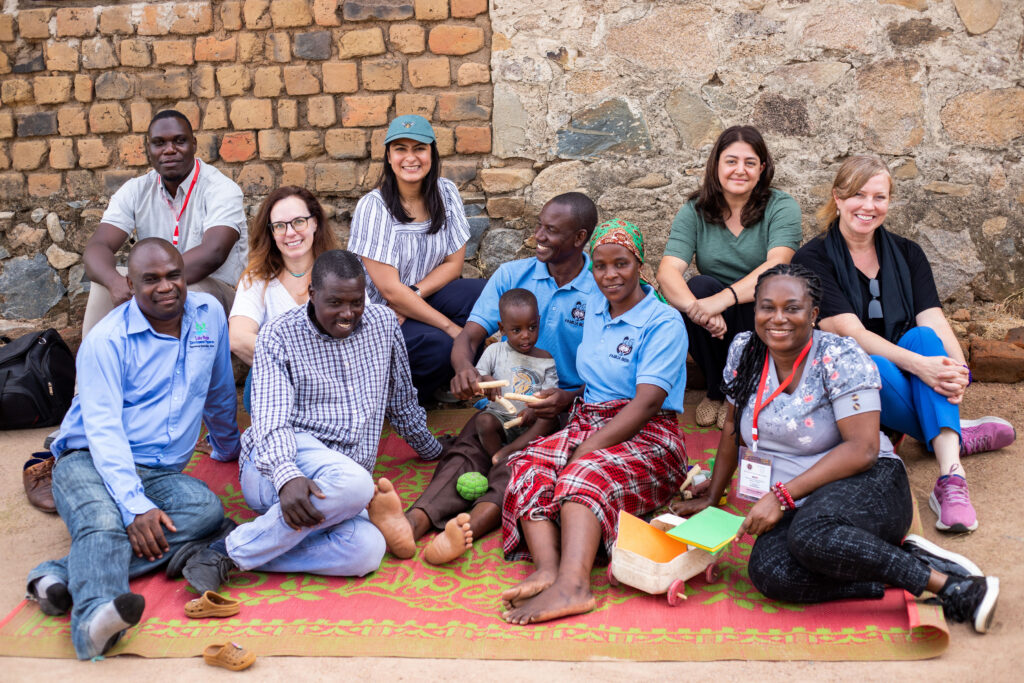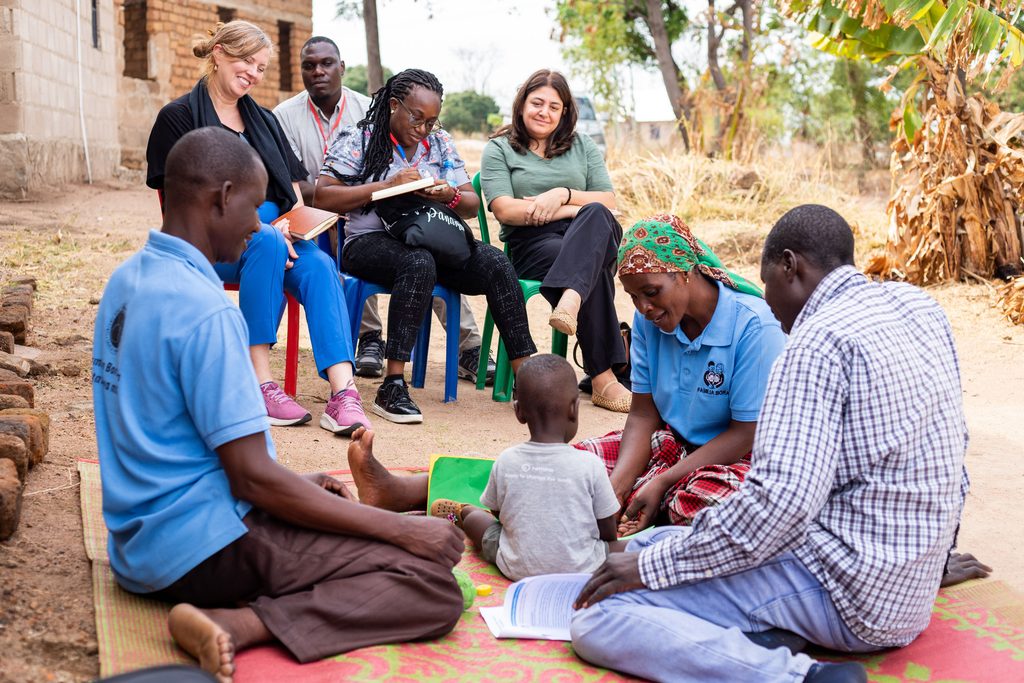
One important aspect of programs that support parenting is the practice of “responsive caregiving,” or the everyday, back-and-forth interactions between caregivers and children that shape how young children learn, connect and thrive. I had the opportunity to see this kind of programming in action during an inspiring two-week trip to visit Hilton Foundation grantee partners in East and Southern Africa earlier this month, including participating in the Responsive Caregiving Learning Exchange in Mwanza, Tanzania, alongside Program Officer Katie Januario. This collaboration—led by local organization TAHEA—brought together partners from Kenya, Tanzania and Mozambique to learn about TAHEA’s Familia Bora caregiving program and see it in action.
Through group sessions, home visits and collaborative work, we exchanged knowledge about how best to support caregivers and children through responsive caregiving and came up with some key lessons learned:
Educational programs that focus on parenting often deprioritize children during implementation, either due to limited capacity or because of a common perception that children distract from training and learning. This learning exchange in Tanzania challenged that assumption directly. It made children the center of implementation, building responsive caregiving skills through practical learning activities in group sessions and home visits, and it embraced the unpredictable energy children bring each day. This was an “aha” moment for our partners and showed that a focus on children is essential to building responsive caregiving skills and ultimately to young children’s development. The program also went beyond just defining “responsive” caregiving and demonstrated the important interactions that children and parents can have throughout the day: playing together, interacting while doing chores, singing and talking together and more.
Continuous training, mentorship and supportive supervision are not “add-ons” to parenting support, but rather essential elements of the service itself.
Too often, early childhood programs deliver training to community health workers in large chunks up front, overwhelming them with new information and not providing the support they need to really integrate best practices into their work. The responsive caregiving program we saw in Tanzania provided a different standard. For example, instead of training workers on all 17 modules of the program within the first days, it provides smaller chunks of training woven throughout the workers’ participation in the program—timing the delivery of training and learning opportunities to when they are most applicable for community health workers. In turn, health workers have more confidence to lead with their own voice, build community and provide thoughtful facilitation instead of repeating information from a script. Learning about this training offered us an important reminder that investing in quality parenting services means investing in community health workers. Continuous training, mentorship and supportive supervision are not “add-ons” to parenting support, but rather essential elements of the service itself.
The program in Tanzania showed impacts on children’s development after just four months of implementation.
Many parenting programs are designed to run for more than a year, and in some cases up to two years. However, the program in Tanzania showed impacts on children’s development after just four months of implementation—much quicker than expected. Although more rigorous evaluation is still ongoing, it appears that the program’s model of delivering a higher number of responsive caregiving sessions over a shorter period of time produced more positive effects on caregivers and children, compared to other parenting effectiveness studies. We hope to learn more about whether these impacts can be sustained over time, as well as how a program like this can be scaled up to reach more young children and caregivers.