
Sister Abby Avelino, MM
International Coordinator, Talitha Kum

Sister Norma Pimentel, MJ
Executive Director, Catholic Charities of the Rio Grande Valley
Sister Georgette Sidbewendin Sawadogo
Director, St. Therese Technical and Vocational College
Opinion: As global aid declines, Catholic sisters offer a powerful lesson in sustainable development: Lasting change is built on trust, local leadership, and the people who remain long after funding ends.
Official development assistance fell by more than 23% in 2025, the largest annual decline on record — forcing governments, NGOs, and local organizations to make difficult decisions about which programs can continue. Clinics and schools may close. Programs may end. Organizations may be forced to withdraw.
This reality forces a critical question for the global development community: When the aid stops, who remains?
For generations, Catholic sisters have quietly been part of the answer. We do not measure our ministry by funding cycles or headlines. We measure it in relationships, through trust built over years, in the strengthening of communities, and in helping those on the margins discover hope and dignity again.
We have spent our lives walking alongside the people we serve — yet, despite our reach, Catholic sisters are often overlooked in discussion about development strategy, leadership, and localization.
As the aid sector confronts historic funding pressures, Catholic sisters offer an important lesson: Lasting and impactful development depends on trusted local leadership that remains long after funding cycles end.
“For too long, Catholic sisters have been viewed primarily as service providers or faith-based charities — if we are thought of at all. We respectfully suggest that this understanding is incomplete.”
We serve in diverse corners of the world. Sister Abby Avelino accompanies survivors through Talitha Kum, an international network of Catholic sisters and volunteers fighting human trafficking and exploitation in more than 100 countries. Sister Norma Pimentel welcomes migrant and refugee families at the U.S.-Mexico border. Sister Georgette Sawadogo trains and supports young women as they become entrepreneurs, educators, and leaders in East Africa.
Our ministries and our cultures differ, but the lesson we have learned is the same: Communities are not transformed by projects alone. They are transformed by people who stay long enough to earn trust and help local leadership grow.
More than 700,000 Catholic sisters live and serve in communities around the world. We lead schools, health clinics, anti-trafficking initiatives, refugee ministries, vocational training centers, sustainable farming programs, and countless other local organizations. Yet our greatest contribution is not simply the institutions we operate. It is the trust we have earned through generations of faithful presence.
We are not deployed into these communities — they are our homes. That changes everything.
“Communities are not transformed by projects alone. They are transformed by people who stay long enough to earn trust and help local leadership grow.”
Throughout my journey with Talitha Kum, the network of Catholic sisters and volunteers fighting human trafficking and exploitation, one truth has become increasingly clear to me: The fight against human trafficking cannot be addressed only through policies, funding, or emergency interventions. A young woman who escaped exploitation once told me: “Thank you for listening to my story and accompanying me with hope.” That moment reinforced something we see repeatedly through Talitha Kum: that sometimes accompaniment is not about having answers, but creating a space of healing and trust.
At the U.S.-Mexico border, presence is a vital humanitarian tool in moments of crisis.
The power of long-term presence and trust becomes one of the holiest ways to make God’s presence visible among us. Every day we welcome families who have endured extraordinary hardship in search of safety. Accompanying them begins the process of restoring their dignity.
Before people need legal assistance, housing, or transportation, they need to know they matter. Presence tells people they are not alone. When the cameras leave the border and public attention shifts elsewhere, the needs do not disappear. Neither do we.
In East Africa, we apply this relational approach directly to economic empowerment and food security. One of the most profound lessons I have learned is that sustainable transformation does not begin with projects; it begins with people.
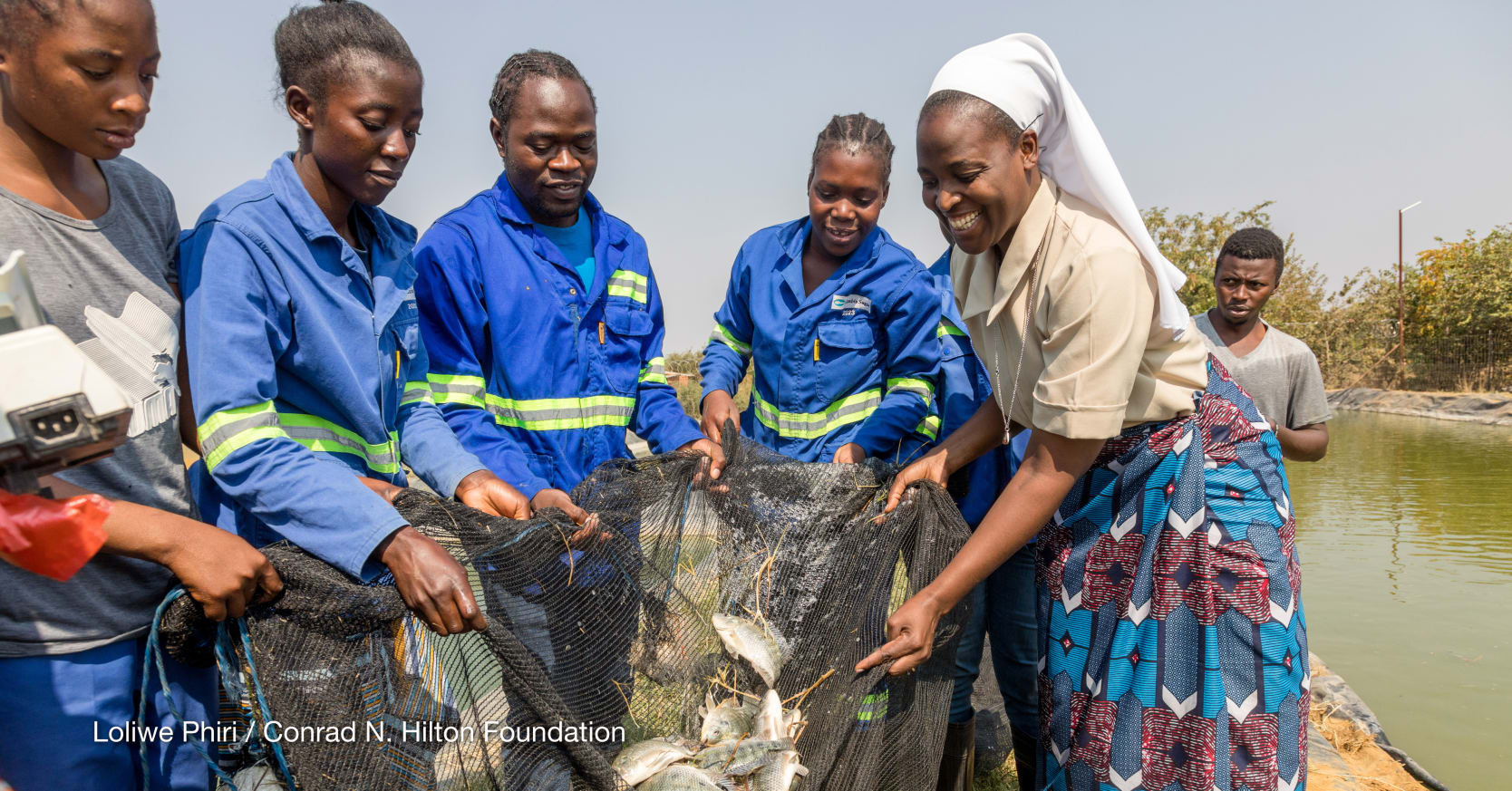
At St. Therese Technical and Vocational College, we have watched young women arrive carrying the burdens of poverty, violence, exclusion, and self-doubt. Through education, entrepreneurship, leadership formation, and accompaniment, they become employers, mentors, innovators, and community leaders.
In one of our programs, families strengthen food security through simple vertical gardens that neighbors teach neighbors to build. As I often say, true sustainability is local sustainability.
These examples are not isolated. Around the world, philanthropic organizations, governments, and faith-based partners have invested in sister-led efforts because they combine deep community trust with long-term presence. Although our ministries differ, they point to the same conclusion: Development is not ultimately about delivering services. It is about restoring dignity, strengthening local leadership, and helping communities recognize the gifts they already possess.
For too long, Catholic sisters have been viewed primarily as service providers or faith-based charities — if we are thought of at all. We respectfully suggest that this understanding is incomplete.
We are educators. Healthcare providers. Advocates. Entrepreneurs. Community builders. Conveners. Trusted local leaders.
Most importantly, we remain.
Long after funding cycles end, after emergencies fade from the headlines, and after international organizations have moved to the next crisis, sisters continue walking beside the people they have always served — not because we are extraordinary, but because this is our vocation.
We know Catholic sisters cannot solve the world’s challenges alone. Poverty, human trafficking, forced migration, conflict, and climate change require governments, multilateral organizations, philanthropy, civil society, and faith communities to work together.
Those in the development sector often talk about “last-mile delivery” and “localization.” As sisters, we are the original “last mile” — proximate, local leaders seeking the common good. We live in the communities we service. We speak local languages. We remain when emergencies fade from view and donors shift priorities. We ask that you come alongside us.
When you invest in Catholic sisters and the organizations they lead, you invest in solutions that communities have already embraced. You help local leaders expand what is already working rather than rebuilding trust from the ground up. You invest in resilient women, stronger communities, and a future built from within.
When you include Catholic sisters at the policy table, you gain more than another stakeholder. Sisters bring the perspective of trusted local leaders who have spent generations solving complex humanitarian challenges with limited resources, deep community trust, and an unwavering commitment to human dignity.
The question is not whether Catholic sisters should participate in development efforts — they already do. The question is whether development institutions will recognize them as the local leaders they are.
In a period defined by aid contraction and renewed calls for localization, overlooking one of the world’s largest networks for trusted community leaders is no longer an option.
“Most importantly, we remain.”
Sister Abby Avelino, MM, is the international coordinator of Talitha Kum, the global network of Catholic sisters working to end human trafficking. A Maryknoll sister from the Philippines, she began her mission in Japan accompanying migrant women, an experience that shaped her lifelong commitment to combating human trafficking. Based in Rome, she leads Talitha Kum’s global initiatives across 100 countries, coordinating efforts to prevent trafficking, empower survivors, and strengthen international collaboration to end modern slavery.
Sister Norma Pimentel, MJ, is the executive director of Catholic Charities of the Rio Grande Valley, where she established the Humanitarian Respite Center in McAllen, Texas, welcoming over half a million immigrants. Known as the late Pope Francis’ favorite nun, she was named one of TIME’s 100 Most Influential People in 2020 and a TIME Woman of the Year.
Sister Georgette Sidbewendin Sawadogo is the mission superior of the Donum Dei Sisters and director of St. Therese Technical and Vocational College in Nairobi, Kenya. She is a leader in women’s empowerment, expanding access to education, entrepreneurship, and livelihoods for vulnerable young women and communities. Through vocational training, leadership development, and community-based initiatives, she equips women to become employers, innovators, and changemakers. Her work demonstrates how locally led solutions build resilience, strengthen communities, and create lasting, sustainable development.