Excerpted from Foundations Look to New Models of International Development amid Retrenchment by Ted Siefer, courtesy Nonprofit Quarterly.

In 2023, the US Agency for International Development (USAID) announced a fairly radical shift for a large, decades-old, bureaucratic institution. It sought to jumpstart overseas projects that were run by local organizations on the ground, working to solve problems like refugee displacement or lack of access to clean water.
This approach, known as Locally Led Development (LLD), was meant to be an antidote to top-down models of international aid, in which government agencies and large NGOs were often disconnected from the needs of communities and laden with administrative overhead. More than a dozen of the largest US philanthropies involved in international development signed a joint statement with USAID backing the principles of LLD.
Today, however, this USAID initiative is over, as is, effectively, USAID itself. Yet, the elimination of USAID has not spelled the end for these new models of development. On the contrary, internationally focused philanthropies are continuing and, in some cases, accelerating programs outside traditional bilateral (single-government) and multilateral (multiple-government/United Nations) frameworks.
A recent survey by the Council on Foundations (CoF) found that three-quarters of the philanthropies that signed the joint USAID statement two years ago are giving more than 21 percent of their grant dollars directly to local organizations, and more than one-third report disbursing over 90 percent of their grant dollars to locally led groups. None of the foundations reported pulling back from LLD.
The Conrad N. Hilton Foundation, for example, has become one of the main funders of refugee-led assistance organizations in Africa and Latin America, the foundation’s CEO Peter Laugharn told NPQ.
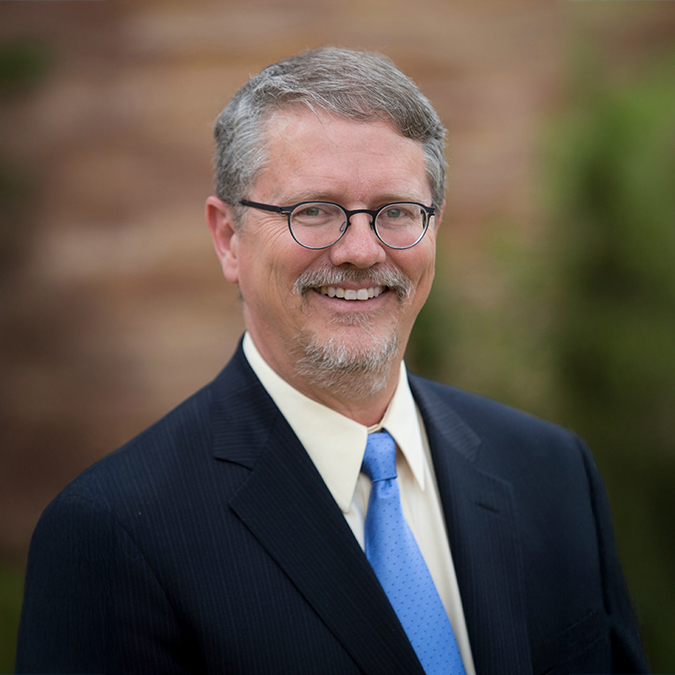
“From our perspective, locally led development and targeted funding is just good donorship.”
Peter Laugharn
President and CEO, Conrad N. Hilton Foundation
“We’ve become the world’s largest funder of refugee-led organizations, which is kind of crazy, [considering that] our budget is $150 million a year,” Laugharn said.
Refugee assistance organizations provide shelter, education, assistance with paperwork, childcare, and other services. The Hilton Foundation supports such organizations in Ecuador, Colombia, Uganda, and Ethiopia, some of them led and run by refugees themselves. For this reason, Laugharn notes, the groups are closely attuned to the needs of refugees, and the assistance they provide has a much greater impact than it would if it had to pass through the traditional channels.
“From our perspective, locally led development and targeted funding is just good donorship,” Laugharn said. “We’re doing our jobs well when we get as close as we can to the people who are most experienced with the problem and tackling it themselves.”
Laugharn also stresses that LLD makes economic sense in a time of strained budgets, noting that, “it tends to be less expensive, it tends to be more sustainable, and it builds local capacity.”
In this sense, the approach dovetails with emerging best practices in the United States that prioritize giving nonprofits on the frontlines of societal challenges greater autonomy and flexibility.