
Ishimwe Jean Marie is East Africa Regional Lead for Refugees Seeking Equal Access at the Table (R-SEAT), a Hilton Foundation grantee partner and international initiative working to enhance the effectiveness of global refugee responses by co-designing mechanisms to amplify refugee leadership ecosystems and increase the participation of refugees at state levels in a meaningful, sustainable and transformative way. Ishimwe is also a journalist and Pan-Africanist who believes that Africa’s collective consciousness in viewing refugees as brothers and sisters offers one of the strongest pathways to genuine inclusion across the continent.

Over the past year, humanitarian and refugee-supporting organizations have been continuously asked to do more with less. Urgent needs remain while resources have been slashed. But despite the harsh constraints of this uncertain funding environment, refugee-led organizations (RLOs) and local actors continue to undertake vital work supporting their communities. Their expertise and proximity to affected communities make them essential partners in any development or humanitarian programming.
However, the rhetoric around localization continues to outpace the actual implementation of localization commitments, particularly in relation to shifting resources and power. At the Global Humanitarian Summit in 2016 in Istanbul, Turkey, humanitarian donors committed to provide 25 percent of funding to local and national actors. Nearly a decade later, the system remains nowhere near this target, with over 90 percent of funding still flowing through international actors. Only one percent of funding for UN Refugee Response plans reaches RLOs directly.
When donors make funding decisions with RLOs considered essential and equal stakeholders, instead of “nice-to-have” partners, the humanitarian system better reflects the realities, solutions and needs of communities on the ground. RLOs led by marginalized groups such as women, persons with disabilities and youth bring unique expertise when funded through inclusionary mechanisms. However, this approach is not common under current funding mechanisms; RLOs led by marginalized groups are too often operating on minimal membership contributions or short-term grants.
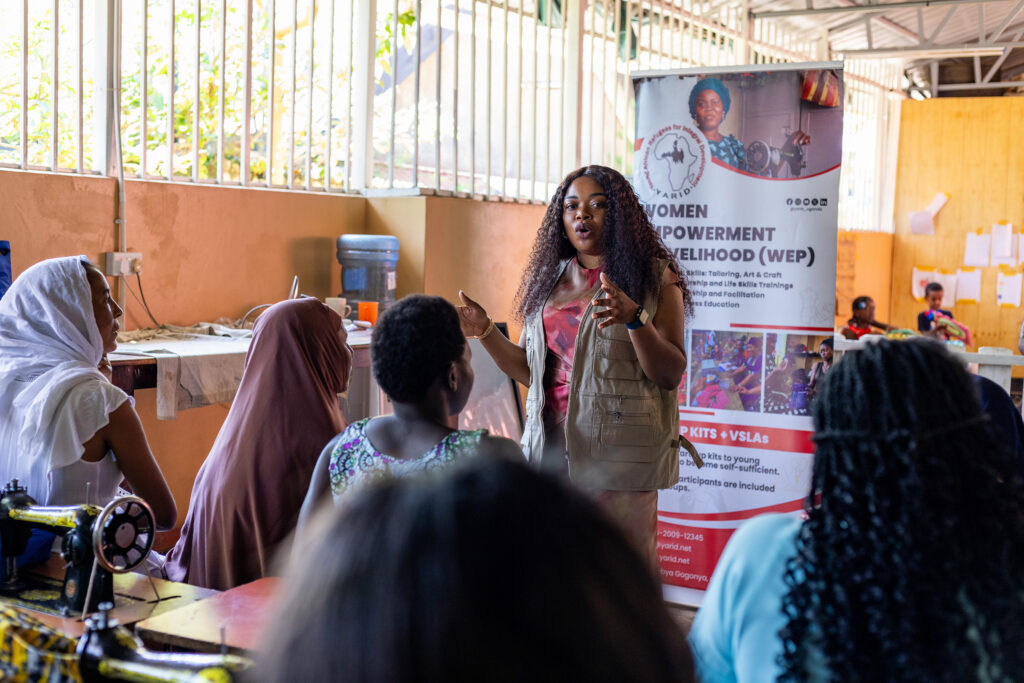
Consistent and quality funding has real consequences for RLOs, local actors and the communities they serve. For refugee-run schools in places like Kakuma and Dadaab refugee camps in Kenya, in settlements in Uganda, and in Jordan’s Za’atari camp, sustainable and quality funding means that teachers can be paid regularly, no longer leaving students with limited or no access to education. RLOs that offer business support to refugees and host communities are no longer forced to keep programs far smaller than desired to sustain them over the long term, while initiatives geared toward returning refugees are able not just to reconstruct communities but also develop them. Stronger cooperation, coordination, inclusive decision-making processes and accountability can ensure localization becomes a global reality.
Donors must understand six key points to make localization truly work for RLOs, rather than allowing it to remain an illusion.
1) RLOs are not complementary; they are essential. When provided with the right support, their work becomes a lifeline for communities, supporting survival, thriving and dignity. The COVID-19 pandemic clearly demonstrated this reality. While many international actors were forced to leave or pause operations, RLOs and local actors remained. They supported both refugee and host communities, provided information, services and protection, and helped communities navigate the challenges of a deadly virus. It is important to remember that RLOs did not emerge during COVID-19; they existed long before, but exclusion and invisibility significantly hindered their recognition. RLOs are not experimental or untested actors. They are proven vehicles for reaching the most underserved communities and ensuring services reach those who need them most. In regional initiatives such as the Shirika Plan in Kenya, the Makatet Plan in Ethiopia, the Government of Uganda’s Localization Strategy, the Horn of Africa’s IGAD Support Platform and the Cartagena +40 Process in Latin America, localization efforts of refugee responses must place refugees and RLOs at the center of decisions, design and implementation
2) Data on funding to RLOs continues to reveal a significant disconnect between commitments and actual delivery. Research by ODI Global reveals that RLOs remain severely underfunded and sidelined, receiving only $49 million in 2024—a fraction of the $4.7 billion allotted to UN humanitarian plans. Late last year while I was in Kampala, Uganda, during a regional policy engagement with over 30 RLOs, only three reported having funding secured for the next two years. This shortfall shows that many RLOs will struggle to operate effectively if the funding they need is not provided. Unlike international organizations, RLOs often do not have access to emergency reserves and are most impactful when their funding has fewer restrictions. Funders must use this evidence to move beyond simply acknowledging scarcity and instead build and streamline financial systems and grant mechanisms that enable RLOs to access quality, flexible and sustainable funding.
3) Direct and quality funding is essential for institutional growth. RLOs have consistently demonstrated their capacity to respond to community needs even amid resource scarcity. Exclusionary narratives around “lack of capacity” or claims that “RLOs are too small” by international stakeholders do not reflect reality: RLOs wish to build stronger internal mechanisms, but they can only build adequate systems, governance, and institutional strength—the core pillars of “capacity”—when major donors and INGOs prioritize direct, flexible and unearmarked funding.
4) Funders and other stakeholders must shift their thinking about refugees and RLOs away from deficit-based narratives toward asset-based narratives and approaches. The work, impact, technical skills, expertise, lived experience and aspirations of refugees and RLOs should be recognized as drivers of the localization agenda. Treating RLOs as experts, equal partners and critical actors enables more effective responses and reduces unhealthy competition among actors.
5) Meaningful refugee participation must be central to localization. Participation and localization are different but interconnected, and both must be embedded and non-optional. Decision-making spaces must prioritize the institutionalization of refugee participation in global discussions, including the Grand Bargain. Too often, RLOs are excluded from global localization discussions or only consulted after decisions have already been made. Meaningful refugee participation is not the end goal; it is the means to more effective, accountable and legitimate humanitarian action. Without it, localization risks remaining purely performative—an illusion that undermines trust and system effectiveness.
At R-SEAT, one of the leading global RLOs, we continue to advocate for the co-design of refugee leadership ecosystems that utilize refugee expertise at the global and state levels through advisory mechanisms. We continue to call for RLOs and refugees to be key actors in the broader “humanitarian reset” and are troubled when we see global discussions and decisions about the reset being conducted without leadership from refugee communities.
6) Donors should use current funding cuts and constraints as an opportunity to ensure localization. While funding limitations are real, this moment presents an even greater opportunity to advance localization goals. Periods of constraint reveal true priorities and test commitments. Local actors, including RLOs, have already demonstrated both the technical and institutional capacity to lead. Shifting power must therefore also mean ensuring that resources reach local actors as first responders.
The continued support of donors who prioritize RLOs with their funding is not only an encouragement but also a challenge to traditional and highly bureaucratic donors and funders to restructure their funding mechanisms. It is a recognition that working with local actors in the refugee ecosystem, particularly RLOs, is the more sustainable approach to solving the issues facing refugee communities. These donors can co-lead with RLOs, allowing for responsibility sharing instead of avoiding or shifting burdens, and in doing so demonstrate that partnership and trust can work.
We must move beyond years of rhetoric about funding RLOs. It is time to shift the conversation away from performance, symbolism and token pockets of “progress” toward concrete action that reforms funding architectures and recognizes that RLOs can manage and implement programs and deliver meaningful impact with quality funding.
To learn more about the Hilton Foundation’s efforts to enhance meaningful participation by refugee leaders and communities in policy and programming decision-making, please access additional resources on our support for RLOs here and the broader Refugees Initiative here.