
A recent gathering in Chicago brought together more than 100 Catholic sisters and lay partners supported by the Conrad N. Hilton Foundation’s Catholic Sisters initiative, along with leaders of several Vatican dicastery’s and the Chicago Archdiocese.
The convening, held under the theme of “Journeying Together in Solidarity and Hope: Strengthening Communities and Cultivating Shared Impact for the Common Good,” served as a kickoff to the Catholic Sisters initiative’s five-year strategy with partners in the United States.
The convening followed a similar gathering held in Tanzania and attended by 130 Catholic sisters from Africa and Europe in June 2026. The objectives for both convenings included developing a shared vision for achieving the initiative’s goals, practicing synodality, integrating safeguarding and systems for the protection of young people and other vulnerable groups, and strengthening the impact of sister-led ministries in communities they serve.
At the heart of the gathering was the ability to connect, network, learn, and share in a more united vision – articulated by sisters themselves – to serve the common good.
Encouraging a culture of encounter
Pre-convening meetings with local Chicago organizations allowed a smaller group of Hilton Foundation staff and Vatican officials to engage in what the late Pope Francis described as “not just seeing but looking; not just hearing but listening; not just passing people by but stopping with them… allowing yourself to be moved with compassion” and to take action.
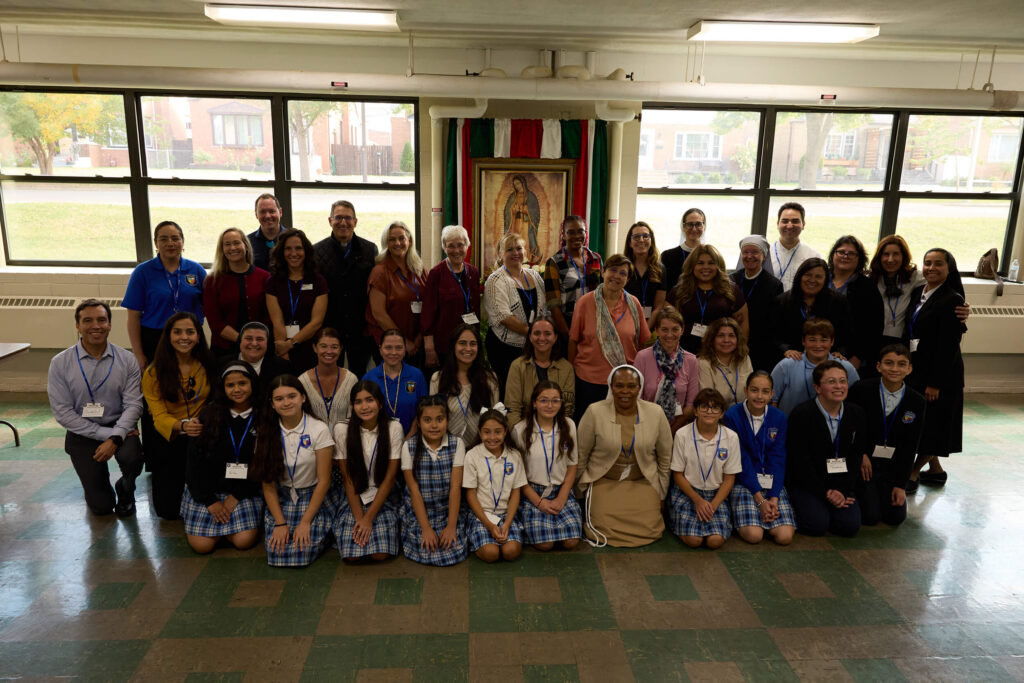
At a Catholic school run by the Daughters of Mary Immaculate of Guadalupe, students led visitors on a tour through classrooms of children, from pre-kindergarten through 8th grade, demonstrating how the significant social-emotional wellness needs of children from nearby disadvantaged neighborhoods are met through counseling and music, movement, and art therapy.
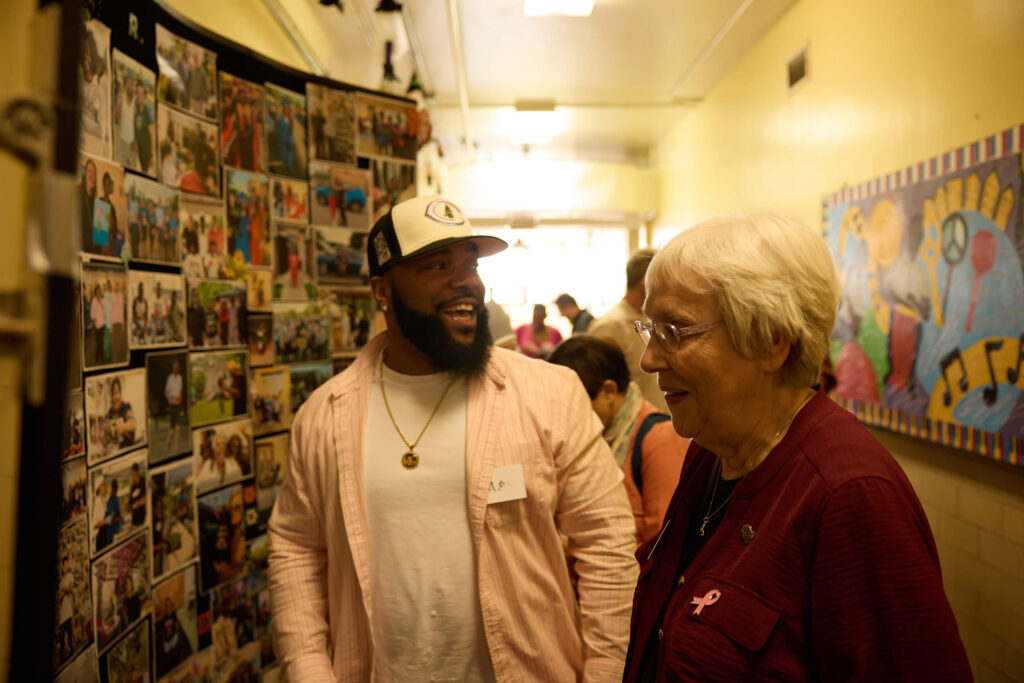
Next, the delegation visited the Precious Blood Ministry of Reconciliation on Chicago’s South Side. The organization, founded in 2002 by Catholic sisters from the Missionaries of the Precious Blood, seeks to restore human dignity through hospitality, hope, and healing. They listened to the stories of mothers whose children had been lost to gun violence or incarceration and heard from staff and volunteers providing support to the mothers and neighborhood families and youth through trauma healing, reconciliation and restorative justice, employment and educational services, and housing and financial support.
Participants in the two site visits from the Vatican included:
Also joining the Vatican delegation was Sr. Roxanne Schares, SSND, Executive Secretary of the Union of Superiors General (UISG).
Experts in the local, national, and global work of sisters shared wisdom and encouraged dialogue
Catholic Sisters initiative head Sr. Jane Wakahiu, LSOSF, PhD, welcomed those assembled at the three-day convening with her thanks for the work they do in communities, and conveyed her hope that their “collective experience of encounter will inspire us to respond thoughtfully, courageously and creatively to the emerging needs of the people we accompany and serve.”
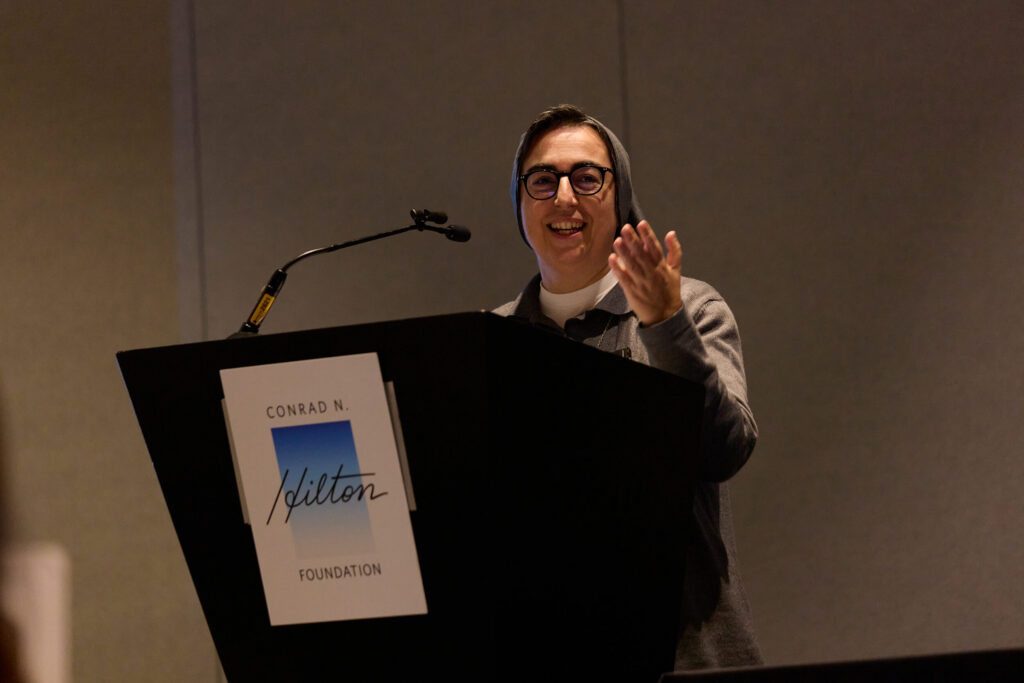
Sr. Alessandra Smerilli, FMA, PhD, Prefect of the Dicastery for Promoting Integral Human Development, provided keynote remarks on uplifting human dignity. She drew on Pope Leo XIV’s Encyclical Magnifica Humanitas, particularly the challenges of artificial intelligence and the digital revolution and how they relate to the protection of the dignity of the person and of integral human development.
“In development work we speak of ‘the last mile’; the people hardest to reach,” she noted. “And the last mile is not only far away. It is also here, in rich cities, among people without papers, without a connection, without a stable address.”
Sr. Smerilli affirmed the critical role of Catholic sisters in accompanying the most vulnerable, saying: “Dear sisters, the data arrived late at the last mile. You were already there… You were doing integral human development in schools, hospitals, working with women and children – long before it became a phrase.”
“We are an instrument for the Church, so that the Church may protect, listen and repair.”
Bishop Alí Herrera
Dignity was also at the heart of a panel discussion that followed. Panelists focused on supporting sisters through formation, skill and spiritual strengthening, leadership advancement, and improving care for elderly sisters. That conversation, which featured experts on gerontology, theology, and consecrated life, led into a presentation by producer and writer Linda Corley on her new documentary film, “Walking My Sister Home.”
The film, which just launched nationwide on PBS, depicts not only the hardships of aging sisters, but also the love that is being reciprocated as their advocates – including younger sisters – seek to provide the older generation of women religious the dignity they deserve.
A collective responsibility for a culture of safeguarding
Bishop Alí Herrera of the Pontifical Commission for the Protection of Minors and Sr. Schares of UISG presented on the topic “Fostering a Safeguarding Culture for All,” which examined the Church’s global commitment to safeguarding in religious life and the commission’s research and policy initiatives.
“Our mission fits in three words: prevention, accountability, and care for victims and survivors,” said Bishop Alí Herrera. “We are an instrument for the Church, so that the Church may protect, listen and repair.”
His commission colleague and regional expert for Europe, Lic. Claudia Giampietro, summed up why safeguarding is critical, explaining that religious communities serve where vulnerability is greatest, including schools, shelters, border ministries, and caring for the elderly. “These are the places where safeguarding is not a document, but a daily relationship,” she noted.
“There is a choice before us,” added Sr. Schares. “What and who and how we choose to protect and care will shape who we are and the culture we create and foster.”
Storytelling from the margins
Sr. Krapić of the Holy See Press Office began her remarks about communication and advocacy as essential instruments for engagement, outreach, and advancing narratives that strengthen communities with a question: “What are the margins?”
She described working as a legal advisor at a shelter for women and children who had survived domestic violence – people described as being on the margins, the periphery of society. While listening to their stories, she discovered their shared humanity: “We had the same desire to be loved; to form a community; [the] same longing for God and meaning for our lives, and longing for our value to be recognized.”
More than her professional services, her relationship with God, she explained, made a difference in the survivors’ lives. Meanwhile, their stories were what made it possible to erase the false notion that some people belong on the margins, while other people belong at the center of society.
Sr. Krapić’s comments led into the subsequent panel on communication tools and practices that can uplift inspiring stories and the dignity of all people – a counterbalance to media coverage and social media algorithms that often deepen political, cultural, and religious divisions and undermine social cohesion.
Among the panelists was Sr. Norma Pimentel, MJ, President and CEO of Catholic Charities of the Rio Grande in Brownsville, Texas, who recounted that the first time she was handed a microphone—nearly five decades ago – she immediately passed it to the person next to her. She eventually found her voice, which she uses to advocate for the dignity and wellbeing of migrants on the U.S.-Mexico border. Today, Sr. Pimentel is regularly in demand for media interviews, where she avoids taking a side in debates surrounding immigration and instead remains “rooted in her faith and her Gospel values.”
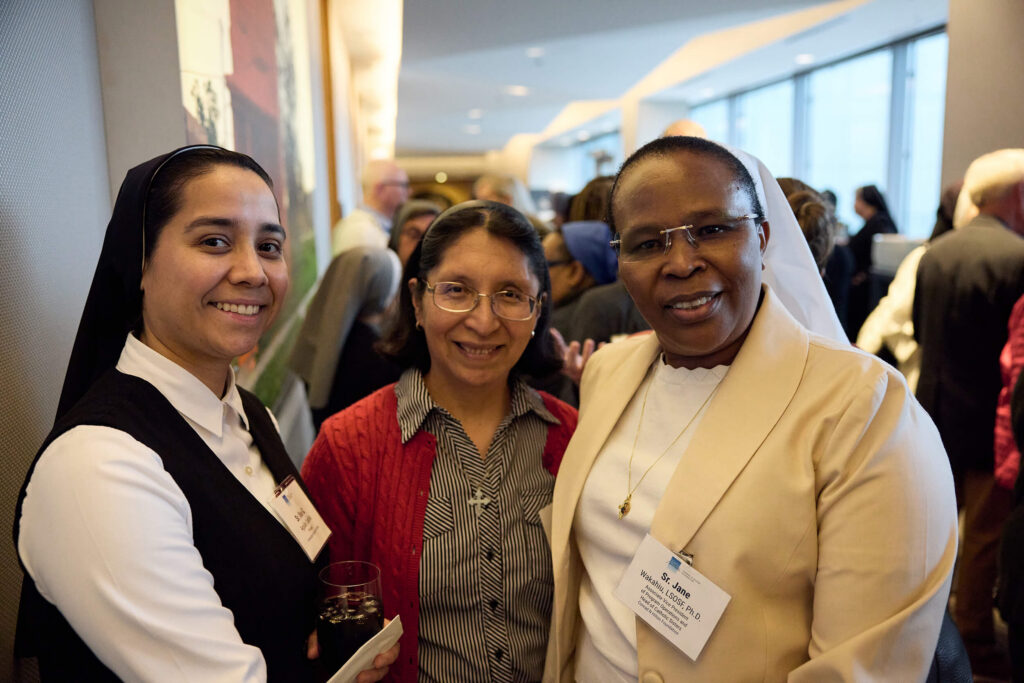
“We have a responsibility to use that voice,” she urged her fellow sisters, “and not be afraid to use it.”
Sisters were encouraged to “Dream Big”
Catholic sisters are also engaged in storytelling through the Pentecost Project, explained panelist Dr. Nataša Govekar of the Dicastery for Communication. The partnership between the Hilton Foundation and the dicastery amplifies the voices of sisters and the communities they serve through weekly stories published on Vatican News. The stories showcase sisters’ voices and experiences and share stories of hope, joy and resilience.
Those themes—hope, joy, and resilience—also permeated the two final sessions: one on synodality and the future of religious life presented by Sr. Marie Kolbe Zamora, OSF, S.T.D., Theologian of the General Secretarit of the Synod of Bishops; the other, an interactive session entitled “Dreaming Big” (related to one of the core values of the Hilton Foundation, “thinking big”). Participants working in similar areas were encouraged to connect, discuss best practices, and identify opportunities for collaboration while “dreaming big” about a shared vision for an increasingly visible and global Catholic sisterhood.