This post is an excerpt from the article Catholic Sister Calls for Survivor-Centered Legal Reforms to Combat Child Marriage in Nigeria, published March 23, 2026, on ACI Africa. Read the full article here.
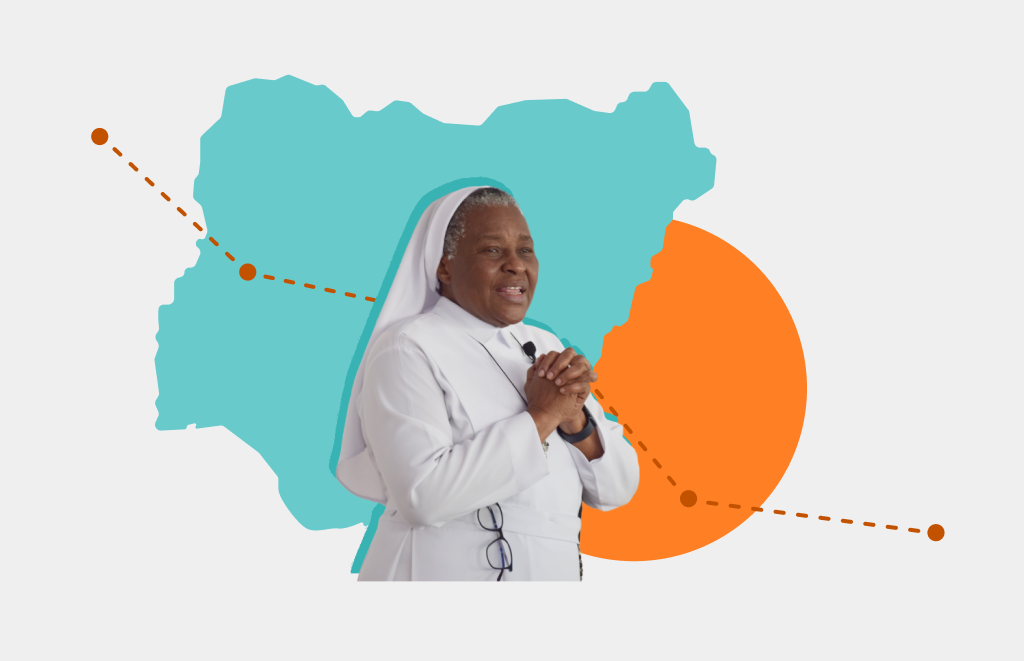
A Nigerian Catholic Sister has called for stronger legal protections against Child, Early, and Forced Marriage (CEFM) in Nigeria, urging policymakers to incorporate survivor-centered experiences when revising laws aimed at protecting women and girls.
“Central to the conversation is the need to amend and strengthen legal protections based on survivor-centered experiences, ensuring that policies effectively respond to the realities faced by women and girls,” Sr. Ngozi told ACI Africa on March 19.
The Nigerian member of the Handmaids of the Holy Child Jesus (HHCJ), who is also Founder and Executive Director of the Center for Women Studies and Intervention (CWSI) in Abuja, participated in the CSW70 gathering at the invitation of the U.S.-based Conrad N. Hilton Foundation.
According to her presentation shared with ACI Africa on March 19, the coexistence of multiple legal systems in Nigeria complicates access to justice for survivors of abuse and harmful practices.
“The legal systems in Nigeria are deeply intertwined,” Sr. Ngozi noted, explaining that it is difficult to “achieve access to justice without engaging with all of them, understanding their complexities, and navigating their contradictions.”
“They can standardize how cases involving women and girls are handled across the country. Because Nigeria operates statutory, customary, and religious systems at the same time, outcomes can differ depending on where a woman lives,” she said in her presentation.
Sr. Ngozi’s advocacy draws on field experience from projects implemented by the Center for Women Studies and Intervention, in collaboration with the Handmaids of the Holy Child Jesus, across 14 communities in Nigeria’s Cross River and Jigawa States. The initiative focused on preventing child marriage and other forms of sexual and gender-based violence (SGBV).
Despite the existence of laws and enforcement mechanisms, she noted that many communities rarely turn to formal legal channels as their first response.
“The legal and policy framework can be a powerful tool, but only if civil society actively works to make it accessible and hold duty-bearers accountable,” her presentation states.
Through advocacy visits to the Ministries of Justice, Health, and Education, the initiative sought to strengthen institutional responses to violence and child marriage.
“We presented data on the prevalence of CEFM & SGBV and demanded that the state fulfill its role in creating a safe environment for adolescents in schools, constructing new sexual assault referral centers, and liaising with the vigilante groups and traditional leaders for reporting and prevention,” Sr. Ngozi explained.
The project produced measurable outcomes. According to the data she shared, 547 adolescents received training in human rights, 82 out-of-school girls received vocational and financial skills training, and 267 survivors received psychosocial support. Communities involved in the program also developed bylaws outlawing child marriage and other forms of gender-based violence.
For Sr. Ngozi, such initiatives demonstrate that legal frameworks can serve as effective instruments of justice when supported by community engagement, political commitment, and adequate funding.