As part of our commitment to supporting the wellbeing and vitality of Catholic sisters, the Conrad N. Hilton Foundation’s Catholic Sisters initiative has invested in collaborative initiatives in Africa, Asia, Latin America and the U.S. aimed at developing long-term solutions for the care of elderly sisters.
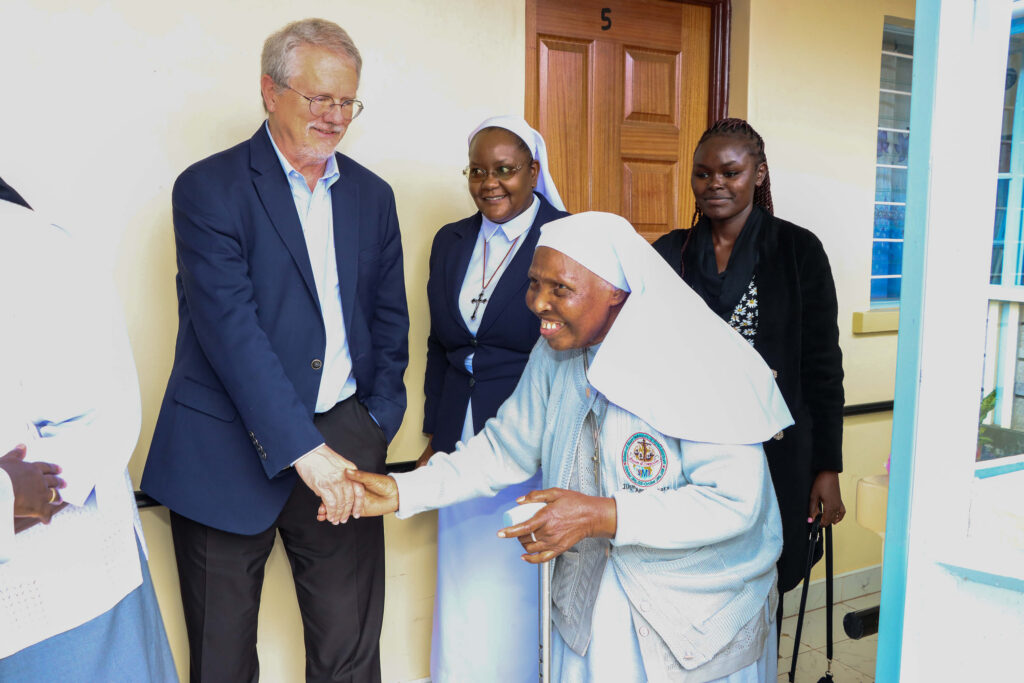
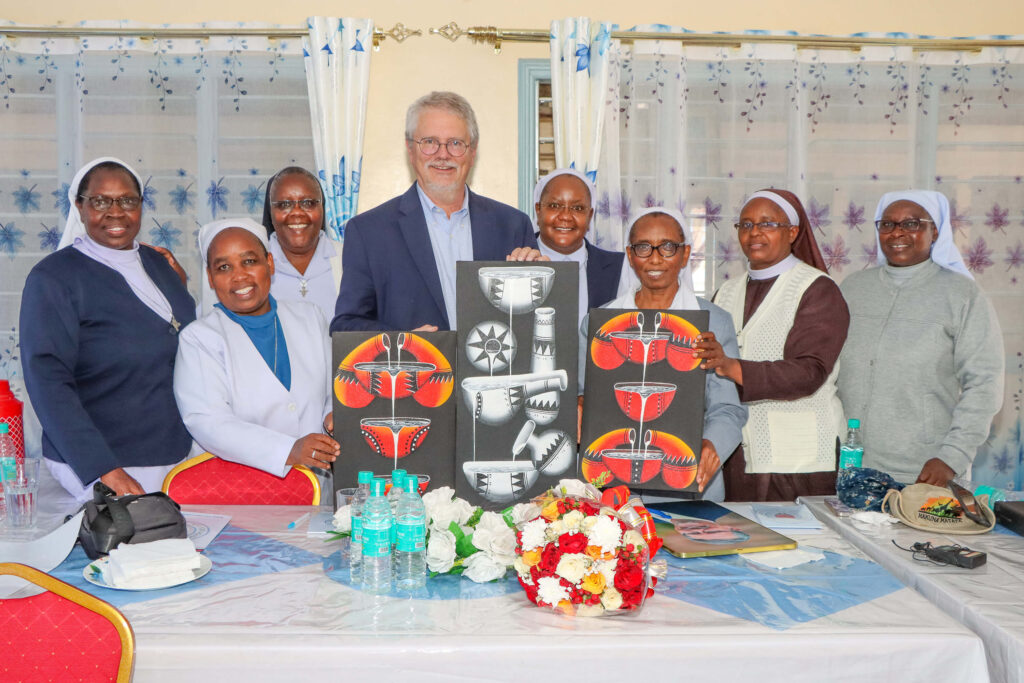
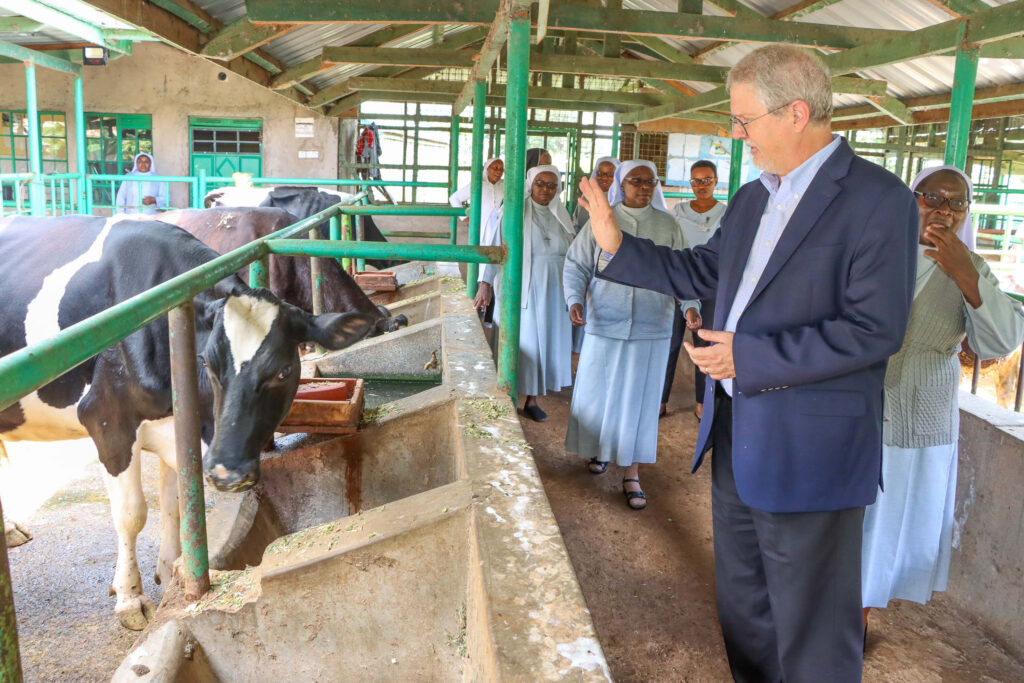
Recently, our partners at the Care for Aging Sisters Initiative in Kenya (CASAK) welcomed Hilton Foundation CEO and President Peter Laugharn during his visit to the retirement home of one of their member congregations in Mwea, Kenya. Founded in 1918, the Congregation of the Sisters of Mary Immaculate serves schools, hospitals, and other social ministries focused on people experiencing economic and social disadvantages. As the oldest indigenous congregation in Kenya, there are currently 82 sisters aged 65 years and above.
The challenges of elderly sisters are not unique to the Congregation of the Sisters of Mary Immaculate. Many congregations in Kenya and throughout the world face increasing healthcare needs, rising medical costs, limited caregiving systems, and inadequate support structures for aging populations. Sisters themselves remain a strong force in responding to these challenges by promoting dignity, compassion, collaboration, and hope for the future, but they need support.
With the growing numbers of elderly sisters – many in ailing health – congregational leaders raised concerns on how to appropriately respond to their needs. The Hilton Foundation’s Catholic Sisters initiative made a grant in 2021 to the newly founded Centre for Research in Religious Life and Apostolate (CERRA-Africa) to carry out research to better understand the needs of aging sisters in several countries.
Nearly 60 congregations who responded to the survey were from Kenya, where health insurance coverage is limited to hospitalization, and geriatric care has remained a neglected area of medicine. Compounding these challenges, government facilities are in urban areas and not accessible to sisters in rural areas. Among the most important findings from the survey:
Armed with the survey results and other research findings, CASAK was founded with a grant from the Catholic Sisters initiative in 2022 to support member congregations in providing holistic care for elderly and infirm sisters, through infrastructure improvement, training, resource mobilization, awareness creation, and advocacy. The network has built momentum for Kenya sisters to create plans for future senior care, with a possibility for pooling resources together for an endowment fund and an inter-congregational assisted living facility for sisters who need more specialized care.
The recent visit to the retirement home of the Congregation of the Sisters of Mary Immaculate showcased significant improvements in the quality of life of the elderly sisters, including the refurbishment of the sisters’ living quarters, replacement of stairs with ramps, and the purchase of wheelchairs and walkers for sisters with mobility challenges.
A newly installed solar heating system provides hot water and lighting for the care home, ensuring uninterrupted services even during power outages. The grant also enabled the establishment of a garden and livestock project, yielding nutritious food for the sisters while generating surplus produce for income and sustainability.
As the Foundation continues to support Catholic sisters, their networks and their communities, we will continue to invest in research that contributes to healthy aging for sisters, who have given so much to so many.