
Ms Babu is an advocate for adolescent girls and young women’s rights and sexual and reproductive health and rights at the Children’s Rights and Violence Prevention Fund. Her journey into advocacy is deeply personal, shaped by experiences that no child should ever endure. This blog is part of a series sponsored by the Conrad N. Hilton Foundation and edited by Katherine King at RTI International.
In a small village in northern Tanzania, a group of adolescent girls leans in to listen to Jane, the leader of a “Safe Space” peer support gathering for those who have experienced early marriage, adolescent motherhood and other challenges. Jane offers guidance, encouragement and inspiration, drawing from her own life story: she experienced female genital mutilation (FGM) at age eight; was married off for a dowry soon after; and was sent to live with her mother-in-law far away from her home village. Before joining this Safe Space group supported by the Ugandan-based Children’s Rights and Violence Prevention Fund (CRVPF), Jane navigated motherhood in isolation and ignorance. Her pain was compounded by the challenge of meeting adult cultural expectations, including being a wife to an older husband, acting as the lady of the home, and deferring to her elders according to custom. With support from this group of girls with similar experiences and with leadership training from CRVPF, however, Jane has become a voice for girls who still cannot speak for themselves. She offers the group a sense of solidarity and helps them process their experiences in a safe setting. Jane’s experience underscores the value of peer leaders and the need for safe spaces where girls can share, learn and heal.
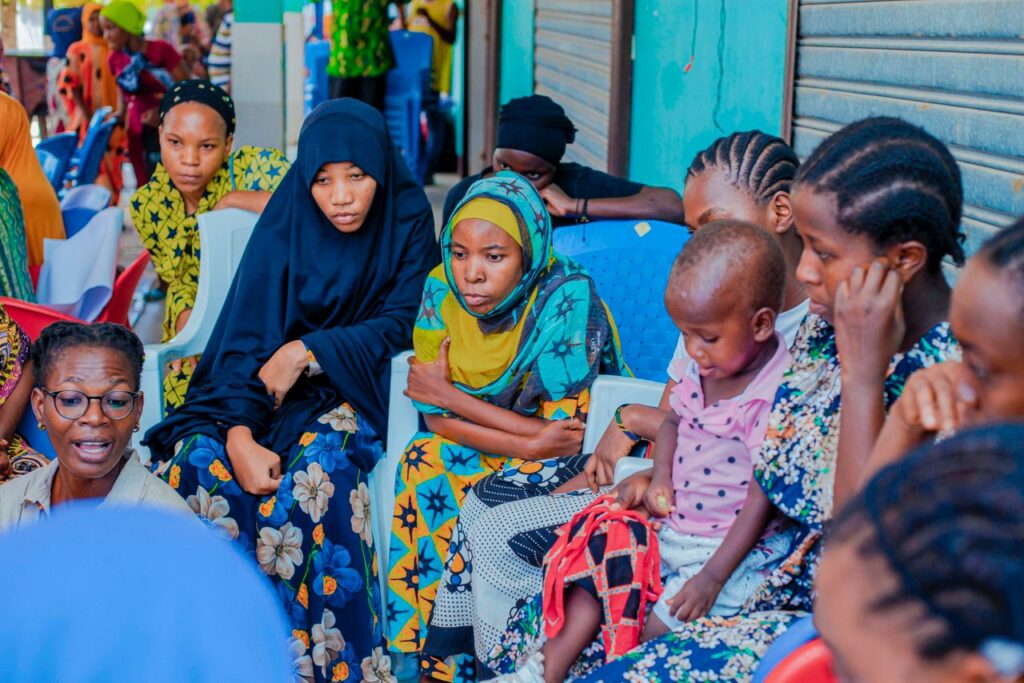
Young women like Jane face significant challenges in rural areas of Tanzania where child marriage and FGM are common practices despite national laws prohibiting both. Early marriages result in early pregnancies. Adolescent girls are becoming mothers in Arumeru before they are emotionally or physically prepared, and without the knowledge and support needed for proper child rearing. In many cases, the responsibility of nurturing and mentoring these young mothers falls to their mothers-in-law, who play a central role in Maasai marital traditions and carry significant power over their daughters-in-law.
In this remote part of Tanzania, the nomadic lifestyle of pastoralist communities means families are often far away from schools and health facilities. People need to travel long distances to access public services and have only infrequent and unreliable transportation options. The limited access to health care makes it extremely difficult for pregnant adolescent girls to receive essential maternal and child health services. Lacking critical antenatal and post-natal care increases the isolation and risk of preventable complications for mothers and babies, contributing to a cycle of vulnerability and hardship that affects both generations.
Parenting practices are transmitted across generations within cultures around the world.[1] In Tanzania, the adolescent mothers I know were themselves the children of mothers who also got married and bore children very young. The adolescent mothers’ own mothers could not care for them well, and now, facing the same challenges, they’re struggling to provide proper care for their children in the same way. This pattern aligns with global data: women’s educational attainment is correlated with positive outcomes for their children, including improved health, education, safety and wealth. When adolescent girls marry and bear children in Tanzania, their education is generally halted, foreclosing the most critical avenue for development of their own social and economic resources – resources which would, in turn, equip them to provide adequate care for their children. [2]
To break this cycle, a two-generation approach benefiting both caregivers and children is necessary. This strategy involves providing psychosocial support for adolescent mothers and helping them provide adequate nurturing care for their children, while engaging the community to provide comprehensive support for the adolescent mothers and their children.
With support from the Hilton Foundation, CRVPF partners with small, local organizations in northern Tanzania that are trusted by their communities to facilitate conversations and training related to adolescent mothers and their children. The staff of these organizations work with community stakeholders, including traditional chiefs, government representatives, and family influencers—such as mothers-in-law and fathers—to identify the pressing needs of adolescent mothers and their children in their community. The consultations also clarify the specific role each stakeholder plays in sustaining long-term change. The interventions are thus community driven, culturally sensitive and strategically aligned to strengthen support systems for adolescent mothers and their children. Initiatives like the “Safe Spaces” peer support group led by Jane have been particularly successful; peer mentors lead the girls through carefully designed sessions to explore power dynamics and share stories without fear of harm, judgement or exclusion. The girls frequently highlight their critical need for emotional, educational, and social empowerment, not just food and healthcare.
Across Tanzania, data and community conversations reinforce the truth that adolescent mothers and their children need holistic, two-generation interventions. These strategies must be rooted in and shaped by the lived experiences and voices of adolescent girls themselves, to ensure that support is relevant and empowering. On culturally sensitive topics like early marriage and adolescent motherhood, community involvement is crucial for village-level interventions to succeed. Traditional leaders who hold significant influence are critical in supporting and supervising these efforts, creating community buy-in and long-term support for adolescent girls.
Tanzania’s Vision 2050 — a national roadmap for social and economic flourishing — emphasizes early childhood development as a key focus. With this critical government support, including improved coordination and accountability, and the commitment of traditional authorities, it is possible to break the cycle of adolescent motherhood and improve the lives of young mothers and their children.
[1] See for example, Lancy, D. F. (2015). The anthropology of childhood: Cherubs, chattel, changelings (2nd ed.). Cambridge University Press.
[2] See for example, Twaweza. (2021). Child marriage factsheet.