
In February, members of the Conrad N. Hilton Foundation’s Global Early Childhood Development (ECD) team conducted a series of meetings and site visits in Kenya to spend time with partners who are improving the lives of young children and their families. Over several days, the team met with 14 partners, including national and county-level government agencies, non-governmental and community-based organizations, and multilateral and technical partners like UNICEF and the World Health Organization (WHO).
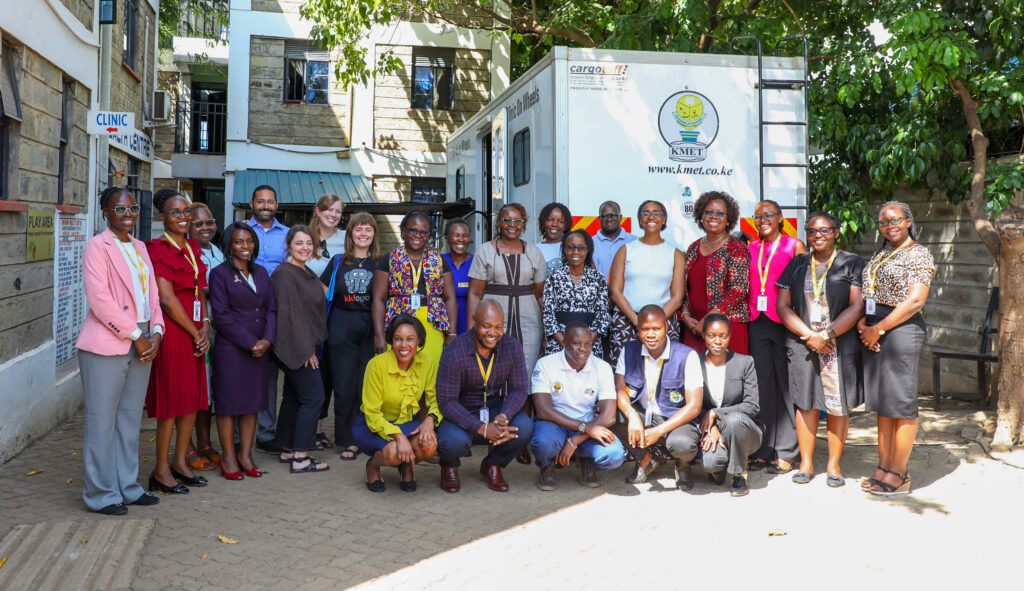
These conversations and site visits brought to life how Kenya has become a strong example of the Foundation’s global ECD strategy: combining targeted support for direct services with strategic investment in systems change. Over the past 15 years, these investments have contributed to:
These encouraging developments are leading to a connected and responsive ECD ecosystem that is locally driven and built to last.
In the communities we visited, frontline service providers demonstrated how programs funded by the Hilton Foundation to strengthen primary health care are promoting optimal child development. For instance, the “Mother & Child Health Handbook”—a tool providing important health and caregiving guidance—is now available nationwide after the Foundation contributed to its development and dissemination.
Using the handbook, families across Kenya are now able to follow a child’s growth and development from the mother’s pregnancy to the child’s early years, “strengthening the tracking of key nurturing care milestones, including early learning, responsive caregiving and child safety,” says Fidelina Ndunge, Senior Technical Advisor for Early Learning and Child Development for Hilton Foundation grantee partner Amref. In addition, Fidelina notes, “by strengthening continuity of care, improving data use at the point of service, and empowering caregivers with actionable information, the handbook supports more informed decision-making and contributes to healthier mothers and children who not only survive but thrive.”
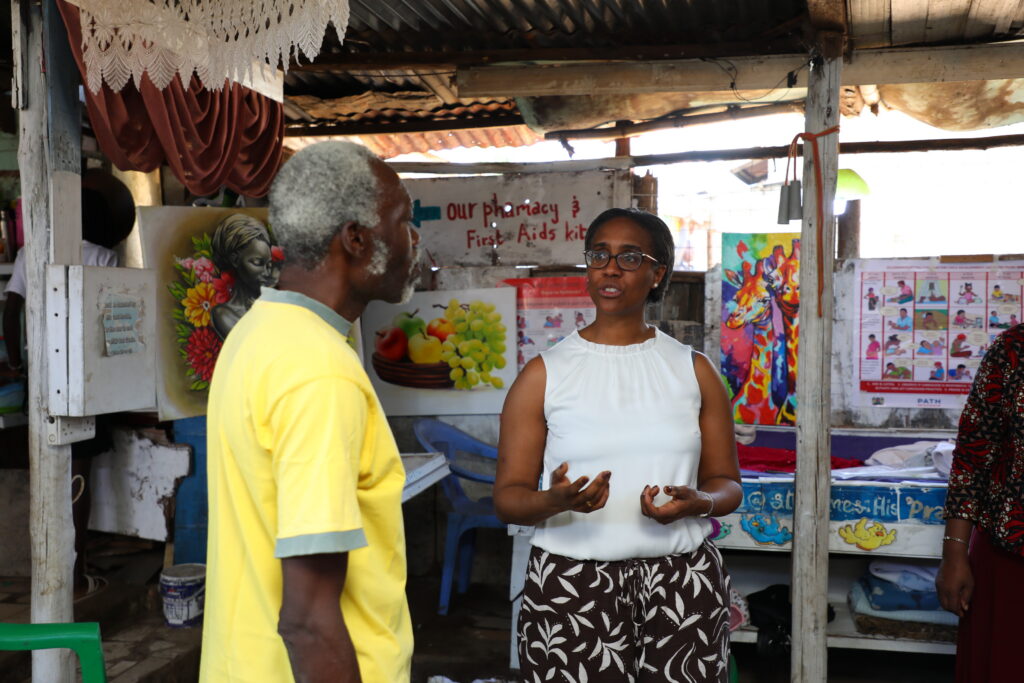
Grantees supported by the Hilton Foundation are also directly impacting young children in Kenya through services aimed at adolescent and young parents, who are often left out of traditional care systems. While in many instances adolescent parents will demonstrate resilience, resourcefulness and a strong commitment to caring for their young children, they face significant barriers, including limited access to health and nutrition services and stigma from their communities for becoming parents at a young age. In western Kenya’s Kakamega County, where the rate of teenage pregnancy is very high at 25 percent, our team had an opportunity to visit grantee partner Investing in Children and Their Societies (ICS-SP), who is supporting adolescent and young mothers by providing parenting interventions and guidance. ICS-SP and other partners focus on meeting the unique needs of adolescent parents while also assessing parenting interventions to ensure young children are receiving the nurturing care they need.
Beyond directly providing for the needs of children and families, our ECD partners in Kenya are also strengthening policies, data and coordination mechanisms to ensure young children are healthy and growing.
The Kenya Demographic and Health Survey (KDHS) is an essential national survey that provides comprehensive county- and national-level data on population, health and nutrition. The Kenyan government conducted the most recent version of the KDHS in 2022 and its findings have been instrumental in shaping health policies and programs countrywide. Through grantee partner UNICEF, the Hilton Foundation is supporting the Government of Kenya to include data on early childhood development within the KDHS for the first time this year, meaning service providers and other stakeholders across health, education and other systems will have access to accurate ECD data and analysis, improving their ability to allocate resources effectively and meet emerging needs.
The Foundation is also funding a “Mini-DHS” survey through the Kenya National Bureau of Statistics that will fill critical gaps between the more comprehensive KDHS conducted every five years. The “Mini-DHS” is more cost-effective and quicker to implement, as it targets just several core indicators and statistics, in contrast with the broader KDHS. During our recent trip, the team had the opportunity to meet with the National Bureau of Statistics to discuss the progress of this “Mini-DHS.” As a result of this new survey, policymakers and service providers will for the first time have access to child development data at the county and regional level. This update will allow for deeper understanding of how young children’s and families’ needs vary in different locations and means policymakers will be able to more effectively allocate resources and respond proactively to key health issues affecting mothers and young children.
In another exciting milestone, the Government of Kenya also plans to launch its first Integrated Early Childhood Development Policy (IECD) this year, supported by the Foundation through partners like UNICEF and WHO. The IECD is a galvanizing policy document that will provide guidance for all government agencies and implementing partners in their programming for young children and their families. Its successful roll-out will ensure that young children across Kenya are receiving consistent care based on unified standards and expectations.
In meetings with partners in western Kenya, our team learned about encouraging progress facilitated by Hilton Foundation support. Between 2018 and 2024, the Foundation’s funding bolstered coordination in Siaya County between government agencies focused on children—groups that had previously worked independently and with little communication. Partners like the Kisumu Medical and Education Trust (KMET) worked over time to help government agencies better plan, budget and implement projects for young children together across the health, protection and education sectors, meaning children and families can be more easily referred and connected to vital services and county and regional governments are leveraging their resources more effectively. For the first time in this region, government partners are able to plan beyond policies and systems focused on survival for young children and transitioning to helping them thrive.
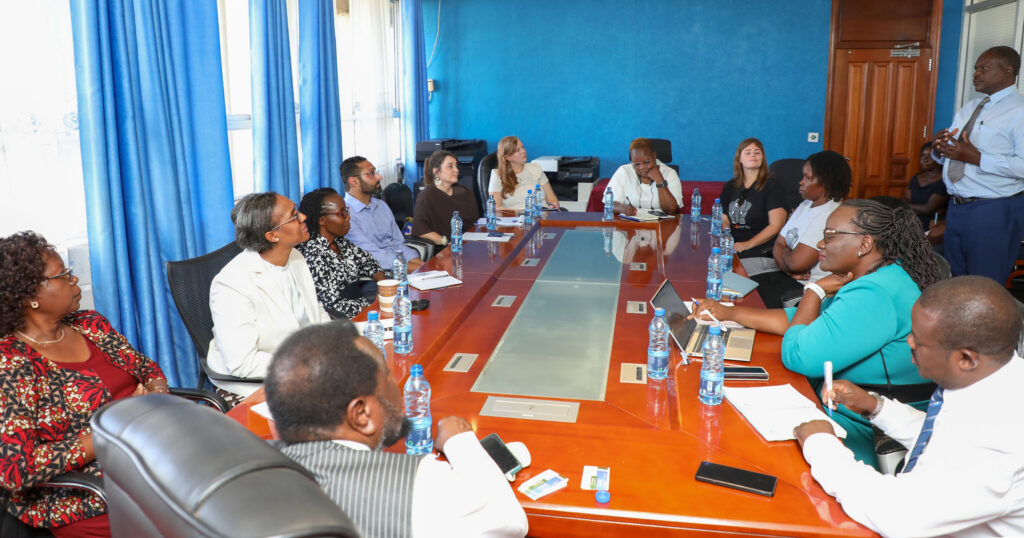
As we seek to build on the great successes in ECD in Kenya from the past 15 years of support, the Hilton Foundation is focused on deepening and enriching both direct services and broader, systems-level changes. Through support for organizations providing childcare and parenting interventions, including those caring for adolescent and young mothers with unique needs, we aim to ensure all parents and young children receive the services and support they need. We plan to continue working with public and private sector partners across Kenya to deepen the relationship between ECD and primary health care systems; promote good communication and information sharing across health, social services, education and other sectors; and scale up access to these critical services to reach populations that have previously been left behind.