New Learnings from Young Mothers Consortium 

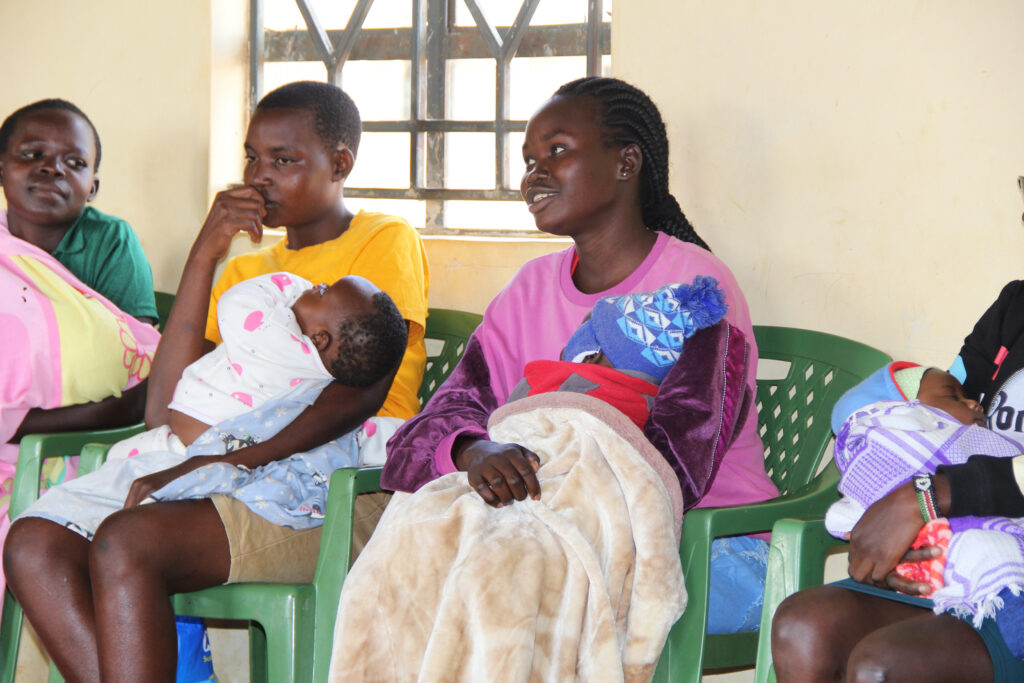
Young mothers hold their babies during a power analysis session led by the Young Mothers Project through the Children’s Rights and Violence Prevention Fund (CRVPF), a Young Mothers Consortium member organization, in Siaya County, Kenya.

Early pregnancy presents multifaceted challenges for girls: their childhood experience is suddenly over, but they are still not afforded the respect and authority given to adults. They often find themselves solely responsible for the health and wellbeing of a new baby while navigating unaddressed trauma and stigma.  

“Economic independence increases a person’s choices. It increases confidence in yourself and your ability, and it makes you responsible.”

Young mother, Tanzania

Across East and Southern Africa, adolescent girls face extreme inequality, structural violence and poverty, as well as unique challenges stemming from young pregnancy: 

  • Mozambique has the fifth-highest rate of child marriage worldwide. At least one in 10 girls in Mozambique has had a child before age 15. 
  • In Kenya, approximately 15 percent of girls ages 15 to 19 have already begun bearing children, with more than 260,000 adolescent pregnancies reported in the country in 2022 alone. 
  • In some regions of Tanzania, more than 40 percent of girls ages 15 to 19 experience adolescent pregnancy. HIV prevalence among adolescent girls remains double that of males. 

Supported by the Conrad N. Hilton Foundation, the Young Mothers Consortium is a multi-country initiative in Kenya, Mozambique and Tanzania that provides direct resources and psychosocial support for young mothers ages 10 to 24. The convenings, education and storytelling experiences facilitated by the Consortium provide young mothers with connection, agency and opportunities for collective action. To date, the four-partner consortium has reached more than 1,200 young mothers and an equivalent number of children, supported 12 early childhood or daycare centers and enabled more than 230 businesses led by young mothers to start or grow. 

“Trust us with money. When we have money, we have choice: we resist violence, we start businesses, we go back to school, we invest in our children, and we plan for our futures.”

Young mothers’ manifesto 

Read the full Young Mothers’ Manifesto here.

Key Lessons Learned 

Over the past two years of dedicated effort on behalf of young mothers and their children, the Consortium has reflected on and assessed its grassroots efforts to develop key takeaways that will inform the next phase of its work: 

  • Young mothers are agents of economic change. They are committed to ending generational poverty and many are already engaged in small businesses or skilled work. Although many young mothers have concrete ambitions to expand existing enterprises by buying land, acquiring equipment or other efforts, they are constrained by a lack of capital. When resources are in the hands of young women, they gain true power: access, control and the freedom to decide. 
  • ECD centers provide core services for children AND enable opportunities for young mothers. Young mothers are able to access education, run businesses and participate in safe space activities when they have reliable and safe child care.  
  • Governments have a critical role to play in supporting children and young mothers. Initiatives supporting young mothers to return to school or access livelihood opportunities are not a burden on public systems and resources; they are strategic investments that offer social and economic benefits for entire countries. When champions within governments exist to drive forward ECD efforts, institutions become powerful and transformative partners in the lives of young mothers. 

“I have learned to value myself. Even if I gave birth while I was young, I learned not to lose hope.”

Young mother