Nonprofit organizations play a vital role in communities across the United States, delivering essential services and advancing opportunity across a wide range of issues. As conditions become increasingly challenging, nonprofit leaders continue to adapt — balancing mission, capacity, and resources to meet the needs of the communities they serve.
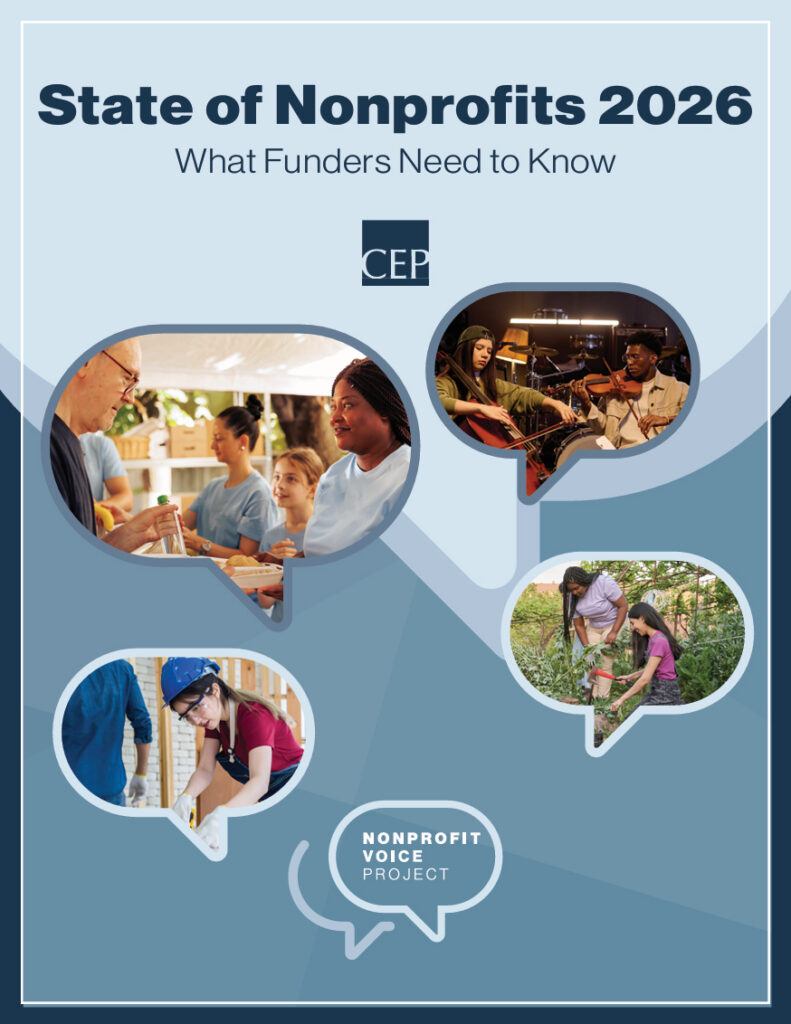
A new report from the Center for Effective Philanthropy (CEP), State of Nonprofits 2026: What Funders Need to Know, offers a timely, data‑driven look at how U.S.-based nonprofit CEOs are experiencing this moment and how they are adjusting their strategies to continue serving their communities. The findings are based on survey responses from 887 nonprofit leaders across the United States, with 380 organizations responding. The Conrad N. Hilton Foundation supported this research, which centers nonprofit leaders’ perspectives and provides independent insights to inform philanthropy.
Key Themes from the Research
Based on survey responses from hundreds of nonprofit CEOs, the report highlights several trends shaping the sector in 2026. Leaders describe increasing demands on their organizations, alongside the ongoing need to support staff well‑being and organizational sustainability. Many also note an evolving funding landscape, with greater uncertainty influencing planning and decision‑making.
Together, rising service demand, workforce pressures, and funding uncertainty are shaping how nonprofit leaders approach their work — requiring careful prioritization, flexibility, and ongoing assessment of how best to deliver on mission while maintaining organizational health.
How Nonprofits Are Responding
The report also documents the ways nonprofit leaders are responding to these combined pressures. Many organizations are strengthening fundraising efforts, diversifying revenue sources, revisiting cost structures, and pursuing new approaches to improve long‑term sustainability.
Collaboration has emerged as an important strategy. About half of surveyed nonprofits report initiating new partnerships with peer organizations, community groups, or cross‑sector partners. Leaders describe sharing services, co‑designing programs, and pooling resources to extend impact and increase efficiency.
Why This Matters for Funders
CEP’s State of Nonprofits series is grounded in listening. Rather than prescribing solutions, the research provides funders with a clearer understanding of nonprofit operating realities, informed directly by leaders’ experiences.
For philanthropy, these insights can support more informed approaches to partnership, communication, and support. Understanding how nonprofit leaders are navigating change — and how they are adapting — can help strengthen relationships and contribute to more effective grantmaking.
By supporting independent research like State of Nonprofits 2026, the Hilton Foundation seeks to contribute to shared learning across the sector. We are grateful to CEP and to the nonprofit leaders who shared their perspectives. Their voices are essential to understanding today’s nonprofit landscape and to informing philanthropy’s role within it.
To learn more, read the full report here.