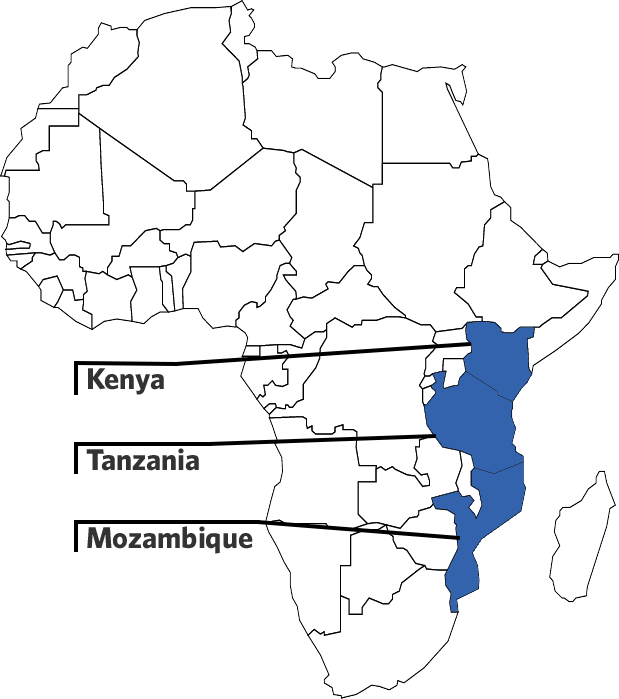
The data is clear: we are not investing enough in our youngest children. Across the globe, more than a third of children ages 24 to 59 months are developmentally off-track, meaning they are not meeting the important physical and emotional milestones that will help give them a strong start to life. In the Hilton Foundation’s countries of focus for Early Childhood programming, this need is particularly pronounced: more than 69 percent, 53 percent, and 17 percent of children are not developmentally on-track in Mozambique, Tanzania, and Kenya, respectively.
The youngest and most vulnerable children remain the biggest blind spots for early childhood funding. Public spending is often substantial around birth, falls sharply during the first three years of a child’s life, rises as pre-primary education expands at ages four and five, and peaks much later in childhood . This financing gap for children ages zero to three has profound lifelong implications, as medical and economic experts identify that period as the time of highest developmental return throughout life.
Thankfully, governments can take practical steps toward ensuring children from birth to age three are visible and funded by:
These recommendations, and several others, are outlined in an exciting new report from Hilton Foundation grantee partner UNESCO titled: Global Report on Early Childhood Care and Education. Financing for equity and quality. Access the report, including a case study focused on the Foundation’s investments in early childhood.