
As displacement crises across the globe expand over time and traditional funding streams continue to restrict, communities are increasingly relying on private sector investment solutions to sustainably meet the needs of refugees and forcibly displaced persons (FDPs). However, FDPs themselves are frequently excluded from private finance, despite significant evidence that they can drive economic prosperity across refugee and host communities. In Turkiye, for example, Syrian entrepreneurs have founded more than 10,000 businesses, while approximately 40 percent of firms in Jordan are owned by refugees, migrants and dual-citizens.
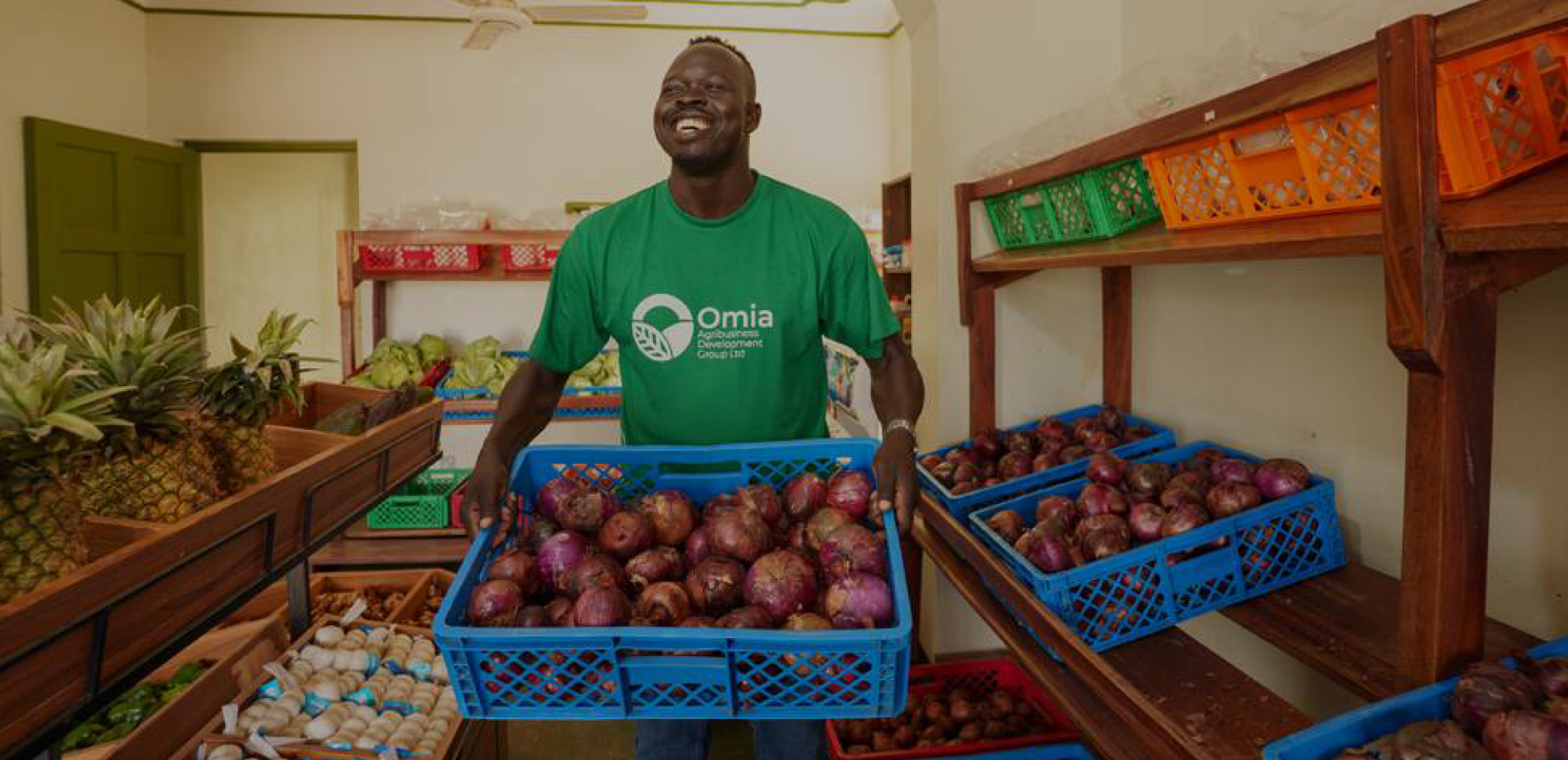
Omia runs one of the largest agro-dealer networks in Northern Uganda, providing agricultural supplies and farmer training to a customer base made up in large part by refugees from South Sudan. For the first several years of the company’s existence, Omia focused on grant funding from non-governmental organizations to slowly acquire customers and build awareness of their products. However, a 3.5-year impact-linked loan—with interest rates tied to performance factors like the number of refugees served—marked an important shift. Omia nearly doubled its revenue within a year and reached more than 10,000 new refugees and host community farmers with agricultural supplies and training.
To build on this success, as part of the FDP Lens Investment Initiative, Omia received $500,000 in new financing, with a significant discount rate for repayment based on additional impact milestones. This support will allow Omia to reach an expected 140,000 additional people over the next five years, creating jobs and improving the livelihoods of displaced farmers in the region.
To ensure that economic growth includes displaced communities amid longer and more protracted displacement, the Conrad N. Hilton Foundation supports innovative approaches like Refugee Lens Investing, which helps build up and attract investment in the economic markets where refugees live. New data on this kind of investment is now available from a several-year, Foundation-supported project called the “FDP Lens Investment Initiative in the Horn of Africa,” managed by grantee partner Acumen.
Phase 1 of the project (2021-2022) focused on investment readiness, including the development of a refugee lens investment strategy, a dedicated accelerator for businesses serving FDPs and targeted seed funding. In Phase 2, however, Acumen began to deploy more investment capital and technical assistance for small-and medium-sized enterprises owned by or supporting refugees. This effort between 2022 and 2025 aimed to create and improve jobs and livelihoods for displaced communities and their hosts through investment in both established businesses—resulting in faster impact on jobs—and early-stage startups, where there is longer-term potential.
Impact
Through direct investment and other support for 14 companies owned by or serving refugees, the program impacted nearly 56,000 lives, including more than 20,000 FDPs and more than 34,000 people from host communities. This total includes community members benefiting from employment, producing or supplying items used by the companies, gaining access as customers or benefiting from improved supply chains in agricultural or other industries.
Lessons Learned
The successes and challenges of the FDP Investment Lens Project offer significant insights for funders and investors seeking to support displaced populations:
Support companies that already work with displaced populations. The FDP Investment Lens Project suggests that the most effective approach when using financial investment to support displaced populations’ livelihoods is to select commercially viable companies with existing links to FDPs and help those companies to grow. For all four businesses that received investment, FDPs were already integral as workers, suppliers or customers; and since these connections make commercial sense, strengthening the business itself supports sustainable impact for FDPs through additional services and jobs.
Enterprises that impact FDPs are often in the early stages of maturity and need support to be investable. Many businesses that explicitly work with displaced populations are early-stage and need grant funding or technical assistance to become commercially investable. Acumen’s experience reinforced the importance of developing financing approaches that balance commercial viability with meaningful inclusion of FDPs.
Technical support to businesses is an important complement to financial investment, but must fit the enterprise’s maturity. Technical support helps businesses prioritize, strengthen their systems and navigate challenges. This support must be adaptive to the business’s needs as circumstances shift and support the founder’s wellbeing and governance. For example, early-stage startups did not need as much specialist support for complex needs, but instead needed help with basic business foundations; more established businesses valued training and capacity building from specialists.
To learn more about the impact of and lessons learned from the FDP Lens Investment Initiative, please access Acumen’s summary report, From the Margins to the Market.