
All young children should have the opportunity to grow up happy, healthy, and learning. But what does it take to support this when children and their families face additional barriers linked to developmental delays and disabilities?
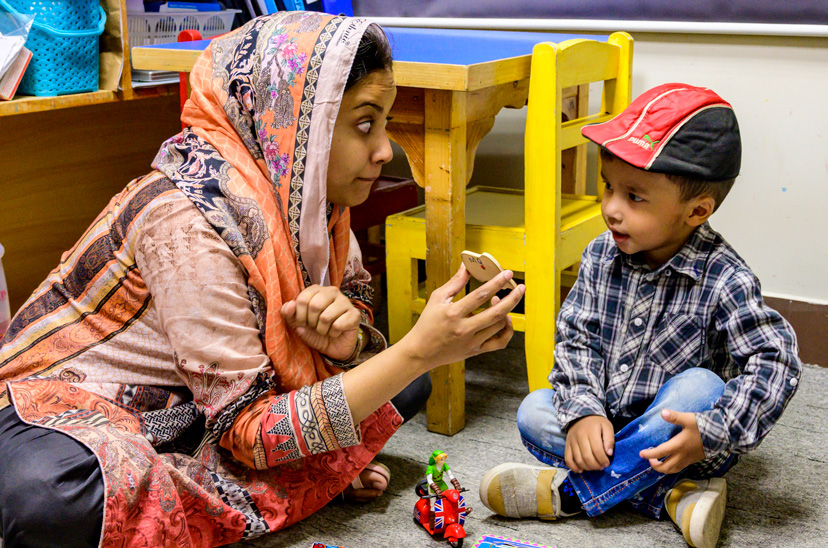
The Hilton Foundation is committed to ensuring that young children with developmental delays and disabilities are fully included in nurturing care and early childhood systems, which is why we are highlighting a new learning brief from our grantee partners UNICEF and the World Health Organization (WHO).
What is Nurturing Care?
Nurturing care is a holistic approach to supporting children in their earliest, most critical years. It brings together five essential components: good health, adequate nutrition, safety and security, responsive caregiving, and opportunities for early learning.
This approach maximizes every interaction with a child and protects them from the worst effects of adversity while producing lifelong and intergenerational health benefits. However, children with developmental delays and disabilities face increased risks: they are more likely to miss out on vaccinations or avoid accessing health services, more likely to be undernourished, more likely to experience severe physical punishment at home and less likely to have access to preschool or other early learning opportunities.
Priority Actions Can Ensure Inclusion
To support children with developmental delays and disabilities and ensure they receive nurturing care, the UNICEF and WHO report urges actions at several levels:
Implications
The UNICEF and WHO brief aligns with the Foundation’s family-centered approach to ensuring children with developmental delays and disabilities get their best start in life. Action is needed within health, nutrition, education and social protection systems, but it is equally important to make sure that the parents and caregivers of young children with developmental delays and disabilities have the partnership, guidance and backing they need to support their children. Caregivers, families, and communities are at the heart of nurturing care for young children with developmental delays and disabilities, and we remain committed to investing in approaches that strengthen the support systems around them. That way, all young children have the opportunity to thrive in nurturing, inclusive environments.