As a program officer for the Conrad N. Hilton Foundation’s Catholic Sisters initiative, I have witnessed firsthand the progress Catholic sisters are making to address gender-based violence (GBV). I have seen the courage of sisters who stand alongside girls at risk of harmful traditional practices, including Female Genital Mutilation (FGM), and who walk with them through education, community engagement and advocacy.
Through the Catholic Sisters initiative, we have invested in two sister-led efforts to combat FGM:
Since their inception, I have seen both the risks and challenges these sisters face daily and the tangible progress they are making. Their work shows real potential to end FGM over time through trusted, community-based education and sensitization.
We are committed to supporting sisters in last mile communities, so they can bring dignity, protection and hope to those most at risk and ensure that no one has to walk alone. This story is part of a larger journey we are on together as sisters, partners and communities to end GBV around the world.
Sisters work to combat a hidden, hyper-localized practice
In both Tanzania and Kenya, FGM is now largely localized to remote communities. It remains closely tied to traditional rites of passage into adulthood and is often linked to poverty and limited opportunity.
In Tanzania, national rates have declined from about 19% in the late 1990s to around 8–10% of women today. Yet a recent survey conducted by sisters in Mara region showed that some families continue the practice because they feel they have no alternatives. Parents who cannot afford education for their daughters may expect them to leave school after the rite and enter early marriage. Those involved in the ceremonies often see no other way to earn a living.
In Kenya, stronger government engagement has pushed FGM further underground. One worrying trend is the medicalization of FGM, with some procedures carried out by doctors, nurses and midwives in private clinics, making the practice harder to detect.
Where FGM persists, the cycle of poverty and vulnerability for girls continues. Many become young mothers without education or livelihoods. They struggle to support their children, remain in extreme poverty and have little opportunity to develop their talents or make choices that support their well-being.
In these situations, Catholic sisters do not abandon these girls. They are often the first people girls turn to when they feel unsafe and have nowhere else to go.
Sisters take great risks to protect women and girls
In many communities, Catholic sisters are the only ones actively intervening to protect girls from FGM and related violence. They serve as community facilitators, securing girls’ right to education and a more hopeful future.
This work is demanding and risky. Sisters intervene to prevent FGM, provide safe shelter, and offer education and livelihoods training to girls who have run away from home or been rescued from early marriages. Two stories illustrate this commitment.
In West Pokot, Kenya, Irene, a facilitator with the Nuru Sisters Network, rescued a seven-year-old girl from domestic labor and enrolled her in school. At age 12, during a visit to her biological mother, the girl faced the threat of FGM and forced marriage. Determined to protect her, Irene took full-time custody. Today, she continues her education because one sister chose to stand with her.
In the Mara region of Tanzania, the Immaculate Heart Sisters of Africa run two centers that offer shelter to girls fleeing FGM. The compounds are fenced, and police are deployed during the high‑risk initiation season. Sisters coordinate closely with district officers, local chiefs and Church leaders to protect both the girls and the sisters. During this period, they remain inside the compound, either stocking up on supplies in advance or relying on trusted contacts. Sometimes people come to the fence to intimidate or pressure the sisters to release the girls. The sisters continue to care for and educate the girls. often until they reach 18, so they can complete secondary school.
This is hard, risky work, but sisters are doing it. The network of sisters in Mara region has rescued more than 500 girls over the last three years.
Sisters introduce new cultural norms grounded in gender equality and human rights
In both Tanzania and Kenya, sister-led, community-based interventions focus on ending FGM by changing minds and changing practices. Together with government partners and NGOs, the sisters help communities recognize that FGM is both a serious health risk and a violation of girls’ rights, while offering safe, respected alternatives to harmful initiation rites. This combination is what makes the work effective.
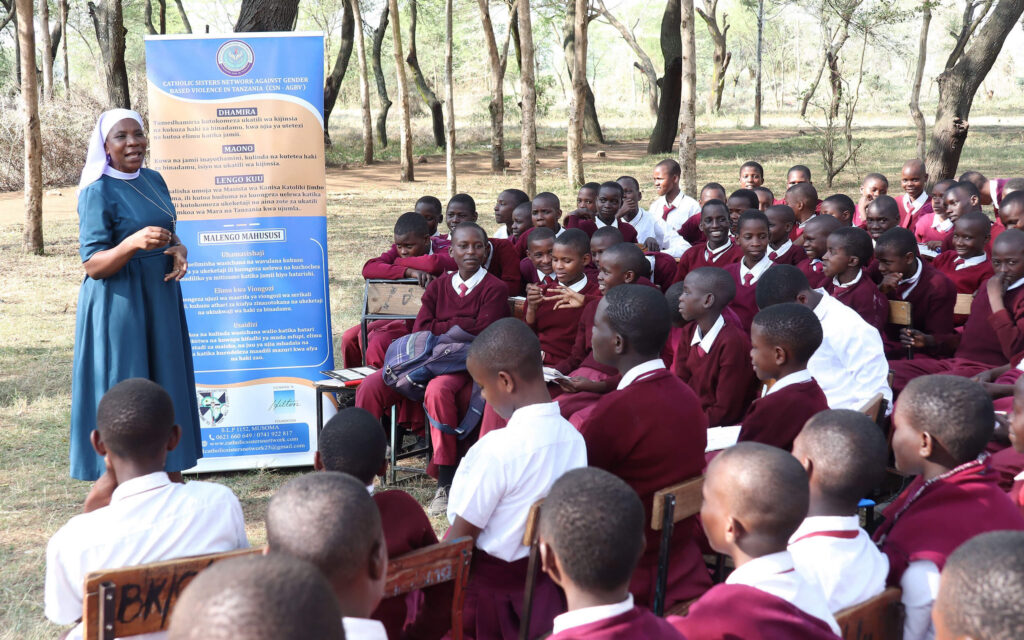
A central part of the sisters’ strategy is school-based sensitization and engagement with local and regional leaders. In classrooms, girls and boys learn to recognize gender-based violence, question harmful norms and speak out safely. Students begin to name FGM openly as a violation of their human rights. Their understanding of gender equality, respectful relationships and human dignity grows when they receive consistent training. Embedding this work in schools is already contributing to a long‑term cultural shift.
We also understand that economic realities sustain some harmful practices. For people whose livelihoods depended on FGM or related traditions, sisters provide skills training and start‑up capital so they can launch small businesses. Once families have a stable alternative income, they are much more willing to abandon practices that harm girls.
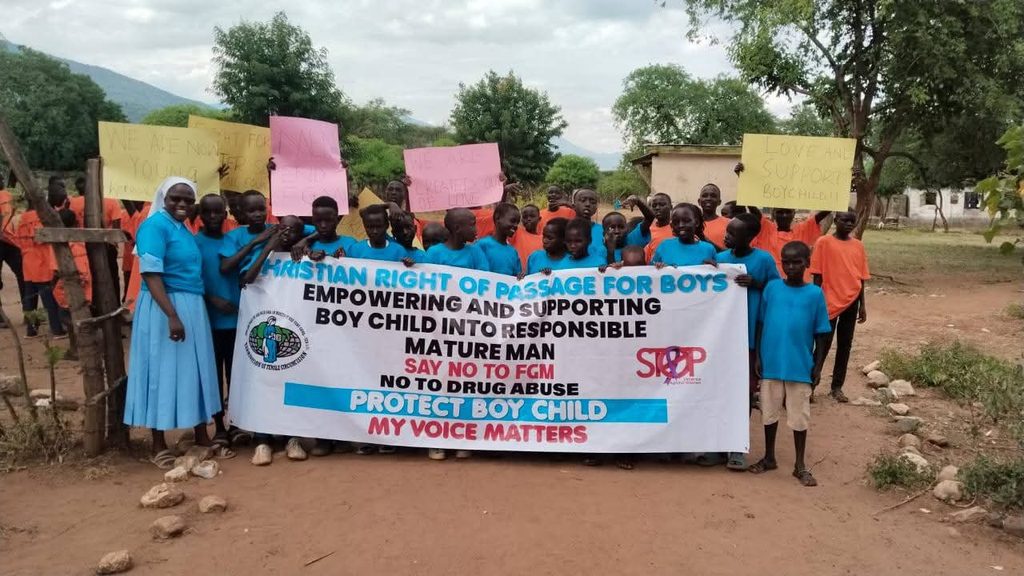
Another key intervention is the Christian Rite of Passage (CROP). In many communities, the transition from childhood to adulthood is tightly bound to FGM. If the harmful custom is removed without replacing the rite, a social and cultural vacuum remains.
Together with local Church and community leaders, we support CROP so that girls participate in sessions on self-awareness, the dignity of the human person and their role in the community. We also bring in the boys, because they are future husbands and are often raised to believe that a man should marry only a girl who has undergone the traditional rite. By engaging boys at the same time, we help transform these expectations from within.
CROP ends with a positive community celebration, similar in structure to traditional ceremonies but focused on blessing and affirming young people rather than harming their bodies. Girls receive gifts and are honored as they “graduate” from childhood to adulthood. This approach has been highly effective because girls still experience a respected transition, but in a way that safeguards their bodies and their futures.
Progress and impact: lives saved and transformed in Tanzania and Kenya
Tanzania – Catholic Sisters Network (Mara region)
Since we began funding the Immaculate Heart Sisters of Africa in Mara region in 2024, sisters and their partners have:
Kenya – Nuru Sisters Network
The Nuru Sisters Network brings together 10 congregations of Catholic sisters serving across Samburu, West Pokot, Murang’a, Narok, Isiolo, Baringo, Meru, Mombasa, Kajiado, Nakuru and Kisii. Drawing on the legacy of the Termination of FGM (TFGM) project, together these congregations have reached:
Looking forward
The journey is far from over, but these early results show that patient, locally rooted, faith-inspired work led by Catholic sisters can help end harmful traditions and make way for new, life‑giving practices. With sustained partnership and investment, I believe we can reach more communities, protect more girls and help entire regions transition to safer, more just cultural norms.